Start with the days you actually have
A wardrobe can feel wrong even when you still like the clothes in it. A new commute, a different workplace, more time at home, or a change in how you spend weekends can alter what you reach for. Before deciding that your style needs an overhaul, notice where the mismatch lies. Are your clothes too formal for most days, difficult to care for, uncomfortable for walking, or simply missing the layers you now need?
Sketch out a typical week, including the less visible parts of your day: travel, errands, weather exposure, and time to change before an evening plan. Then list what an outfit needs to do in each setting. You might need comfortable shoes and an easy outer layer far more often than another special-occasion look. This gives you a practical starting point without assuming that every change in routine calls for a new wardrobe.
Keep the preferences that still feel like yours
Practical requirements matter, but they do not have to erase your taste. Look at a few outfits you enjoy wearing and ask what they have in common. Perhaps you prefer relaxed shapes, crisp collars, soft textures, simple colours, or one noticeable accessory. These details can carry through to a different dress code. Someone who likes tailored jackets, for example, may feel equally at home in an unstructured jacket over a comfortable top.
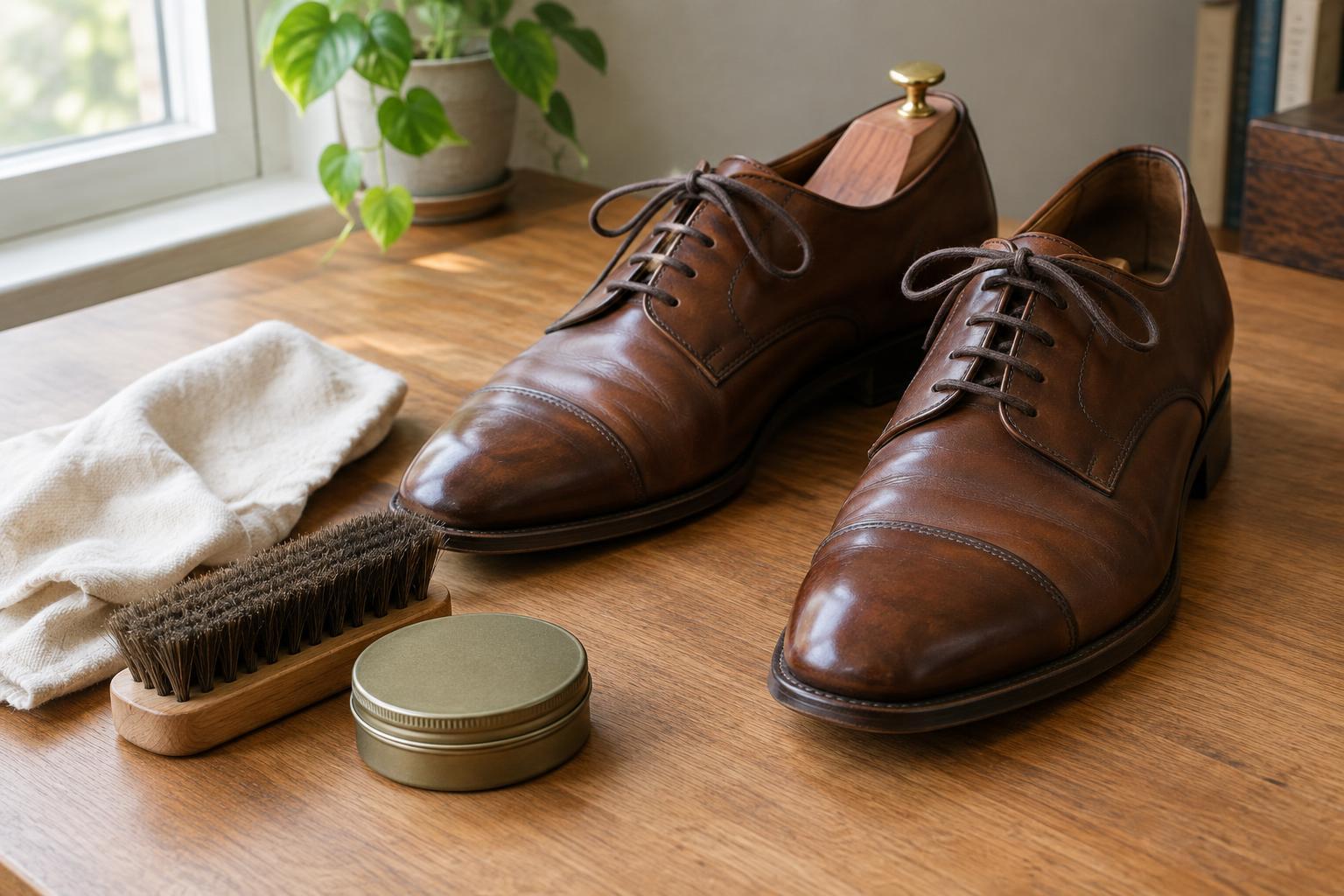
It also helps to separate a garment from the feeling it once provided. You may no longer need the shoes you wore to an office every day, but you might still appreciate the polish they added. A neat flat or another shoe that suits your current activities could serve that preference better. The goal is not to preserve every old outfit; it is to recognize the elements worth bringing forward.
Review your wardrobe in outfit combinations
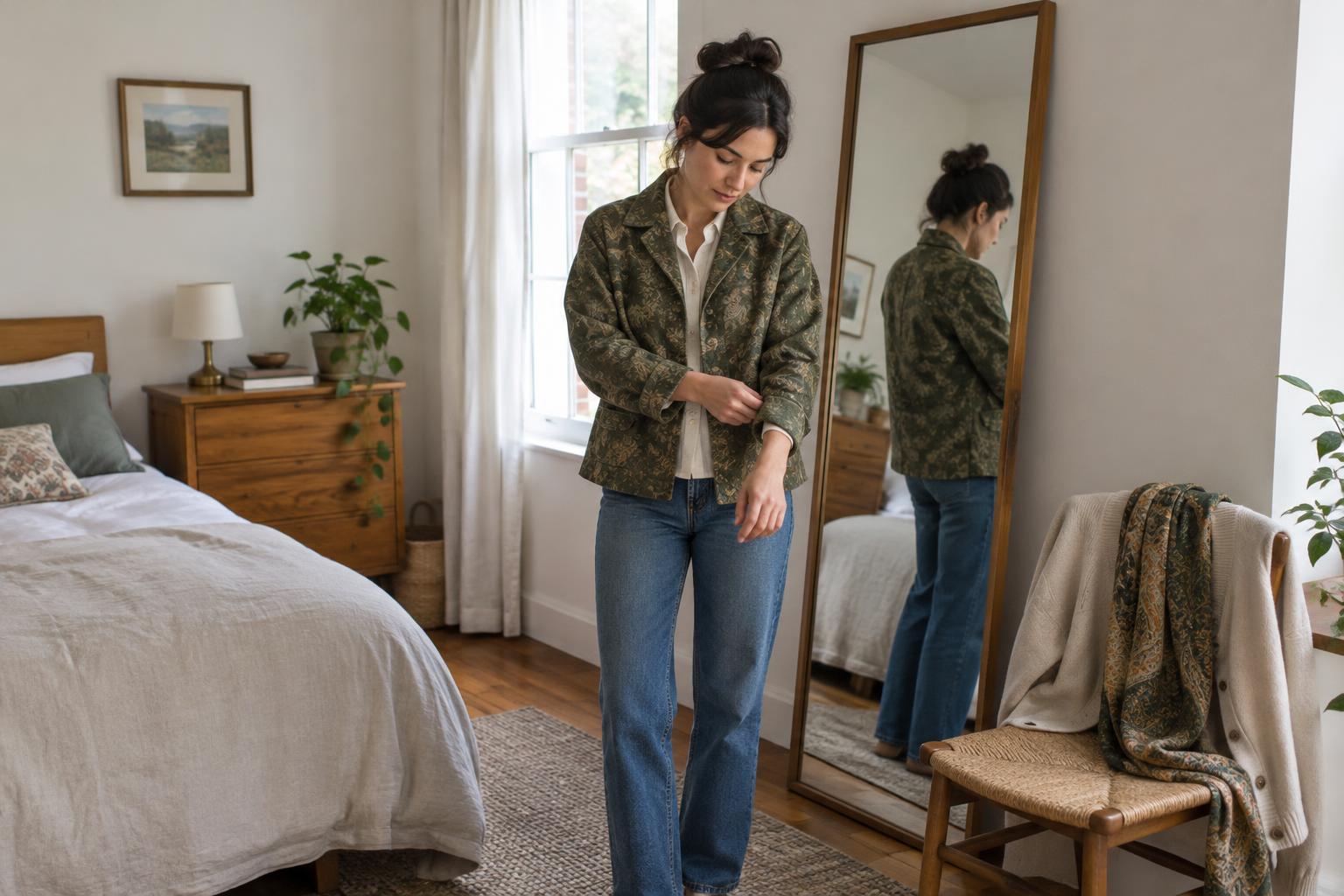
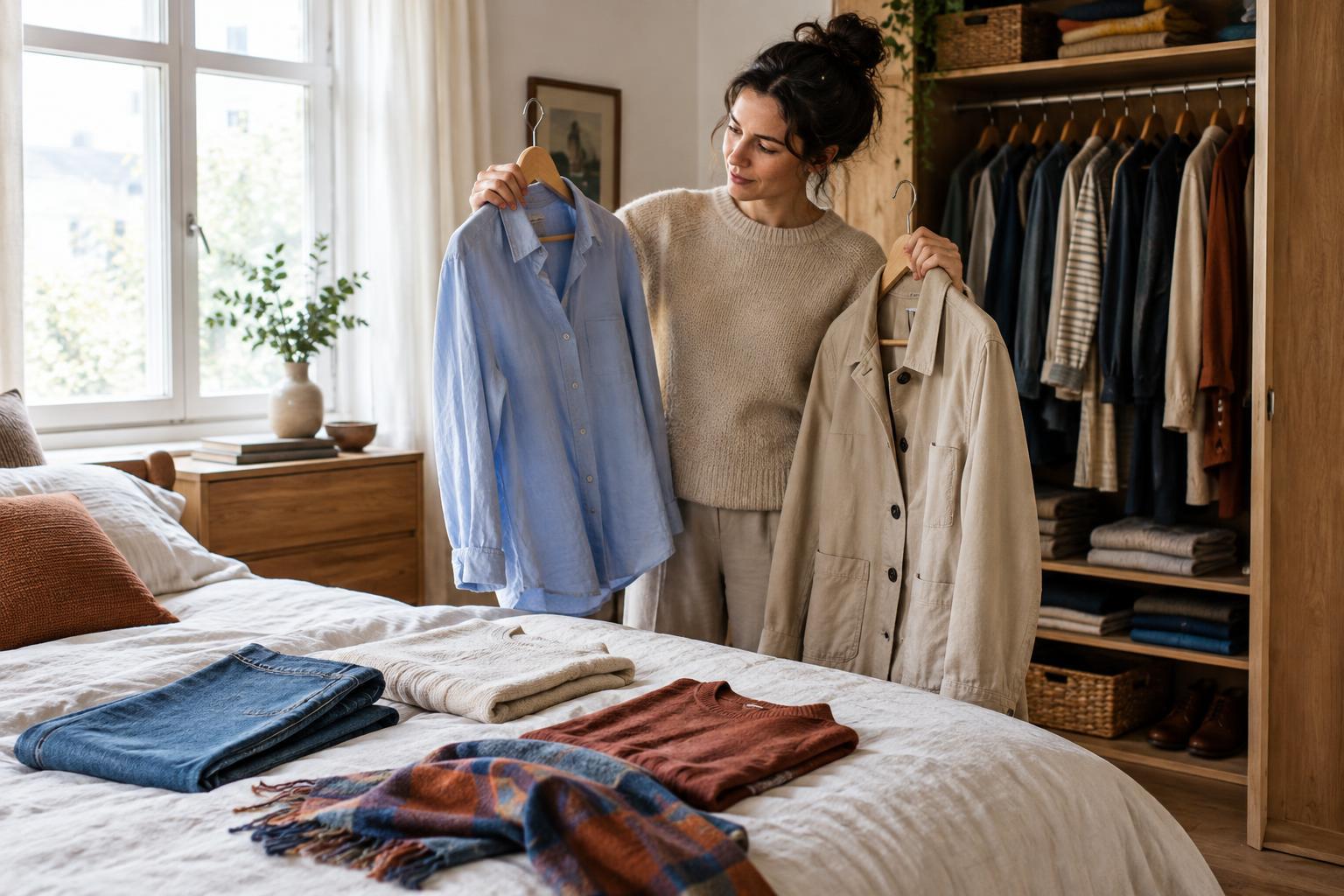
Instead of sorting everything into keep-or-discard piles at once, try building outfits for your present routine. Start with items you already wear regularly, then see what works alongside them. Try on combinations, move around in them, and check whether you would want to wear them for a full day. A piece that looks promising on a hanger may not suit your current pace, while an overlooked item may become useful with a different pairing.
Pay attention to repeated obstacles. If several outfits work until you need suitable shoes, the gap may be footwear rather than clothing. If every combination depends on the same top, an additional top with a similar role might be useful. Make a short list of these specific needs. It is more helpful than a broad resolution to buy a whole new set of basics, especially when you are still learning what your routine demands.
Experiment before making big changes
A change in schedule can be a good reason to try a new outfit formula: a familiar pair of trousers with a softer shirt, a simple dress with everyday shoes, or a casual layer over a more polished base. Small trials show you what feels natural without requiring a firm decision about your new style. Wear a combination on an ordinary day and note what you adjusted, avoided, or enjoyed.
Accessories offer another low-commitment way to shift an outfit. A scarf can add colour to neutral clothes, a belt can change the shape of a loose layer, and a different bag may make an outfit more practical for your day. Choose accessories for both their appearance and their job. If you now carry more items or need your hands free, the bag you use may matter more than a decorative finishing touch.
Let your wardrobe settle into its new role
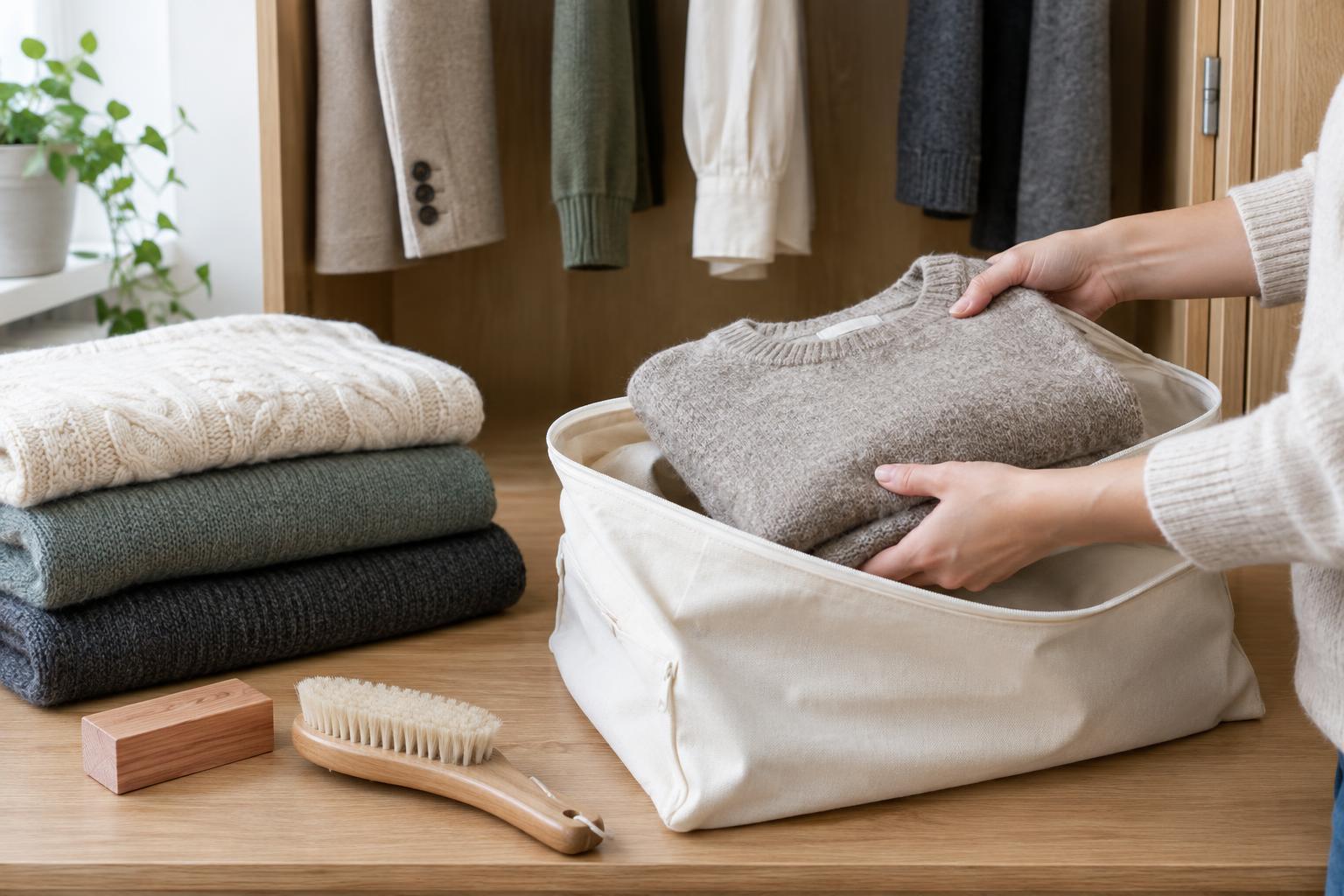
You do not need to resolve every wardrobe question immediately. Set aside clothes that are useful only occasionally if you have room for them, and revisit uncertain pieces after you have lived with the new routine for a while. When you do add something, consider whether it works with several outfits, feels comfortable in use, and fits the care you are willing to give it. A versatile item is only valuable if you actually want to wear it.
Reassessment is less about finding a fixed label for your style than making your clothes support your life as it is now. Keep what works, adapt what you can, and allow some preferences to change. A wardrobe that makes everyday dressing easier while still feeling personal is a better outcome than one that perfectly matches an old version of your routine.