Why clothes pill
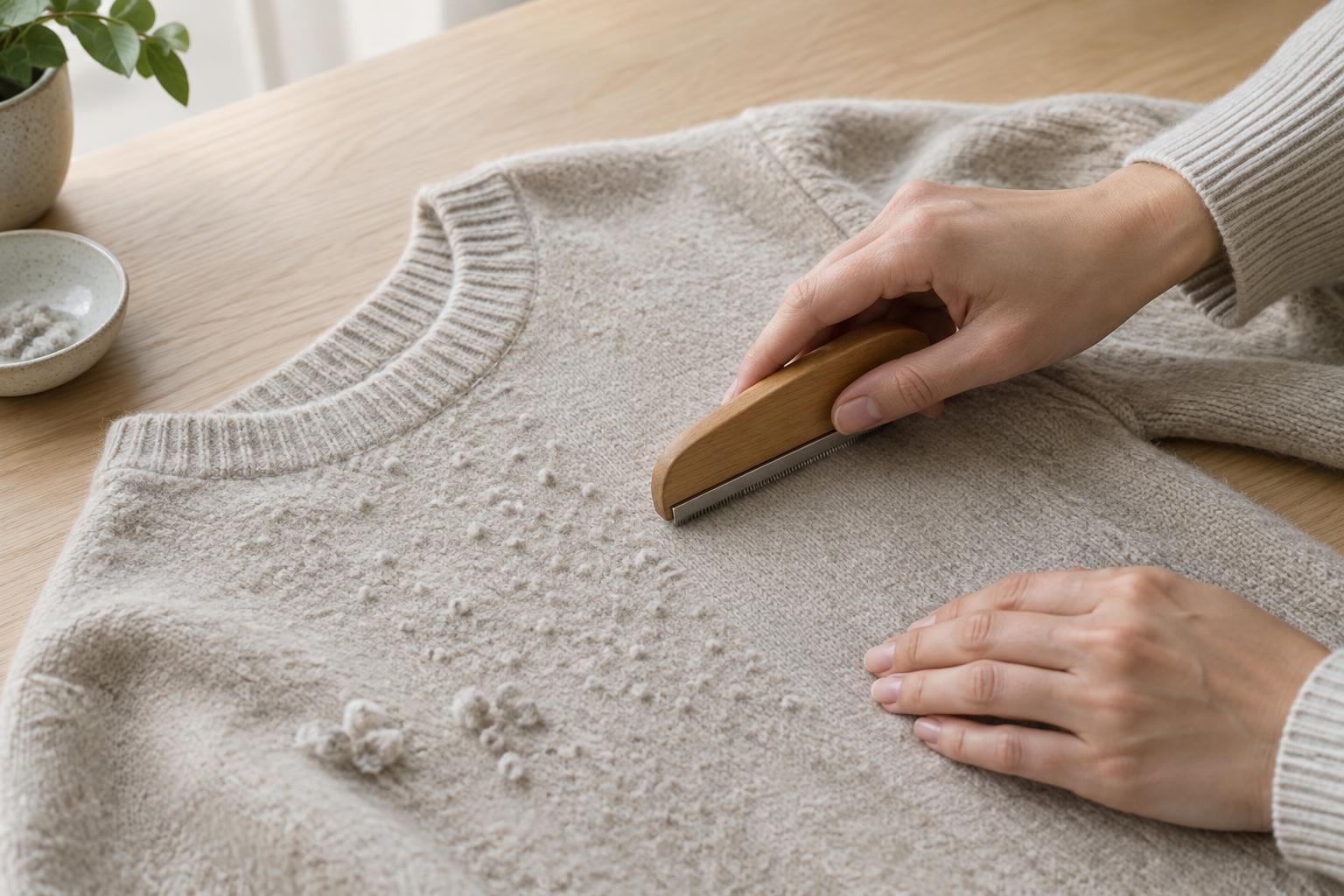
Fabric pills are small balls of fibres that gather on a garment’s surface. They often appear where fabric rubs against itself or another surface: under the arms, along the sides of a sweater, or where a bag strap rests. Pilling does not necessarily mean a garment is poorly made. Some soft or loosely spun fabrics are simply more prone to it, and everyday wear can bring loose fibres to the surface.
The aim is to remove the pills without pulling out more fibres or cutting the fabric beneath them. A light touch matters more than speed. Before working on a garment, check its care label and look closely at the weave or knit. If it has a loose texture, decorative loops, embroidery, or a very fine surface, use extra caution.
Prepare a clean, flat work area
Start with a dry garment. Lay it on a firm, well-lit surface and smooth the area you want to treat. A flat surface helps you see what is a raised pill and what is part of the fabric. Work on one small area at a time rather than trying to depill the whole garment in a hurry.
Test your chosen tool somewhere inconspicuous, such as near an inner hem. Stop if it catches threads, leaves a fuzzy patch, or changes the texture. Avoid stretching the fabric tightly; gentle smoothing is enough. On a knitted garment, pulling it taut can make a tool more likely to catch individual stitches.
Choose a tool that suits the fabric
A fabric shaver can be useful on sturdy, fairly smooth surfaces, including many sweatshirts and tightly knitted sweaters. Keep its head flat against the fabric, use light pressure, and move slowly. Empty the collection compartment when needed so you can see your progress. Do not press down to reach pills buried in the fabric: that increases the chance of nicking a thread.
A sweater comb offers more control for larger pills on a firm knit. Use short, gentle strokes in one direction and lift away the collected fibres regularly. If a comb snags, switch methods rather than forcing it through. For a loose or delicate knit, fingers may be the safest option: pinch a clearly detached pill and ease it away only if it comes off without tugging the surrounding stitches.
Be wary of improvised shortcuts. A razor blade or sharp scissors can cut a garment with one slip, while aggressive brushing may raise more fibres. Sticky tape may pick up loose lint, but it is not a reliable way to remove pills that are attached to the fabric. When a piece is especially delicate or valuable to you, leaving a few pills in place may be preferable to risking damage.
Finish gently and know when to stop
After removing the most visible pills, brush away loose fibres with your hand or a soft clothes brush suited to the fabric. Hold the garment up to the light and check your work before making another pass. A perfectly smooth finish is not always realistic, particularly on soft knits. Repeatedly shaving the same patch can thin its surface over time.
If you find a snag, pulled loop, or hole, stop using the tool on that area. A pill can sometimes be tangled with a structural thread, and pulling harder may make the problem worse. Treat depilling as occasional maintenance, not a task to repeat after every wear.
Reduce pilling between wears
You cannot prevent all friction, but you can limit some of it. Wash garments according to their care labels, turn suitable items inside out, and avoid overloading the machine so clothes have room to move. A gentle cycle and an appropriate laundry bag may help protect knits from rubbing against rougher items, zippers, or hooks. Fasten closures before washing and separate delicate pieces from heavy towels or denim.
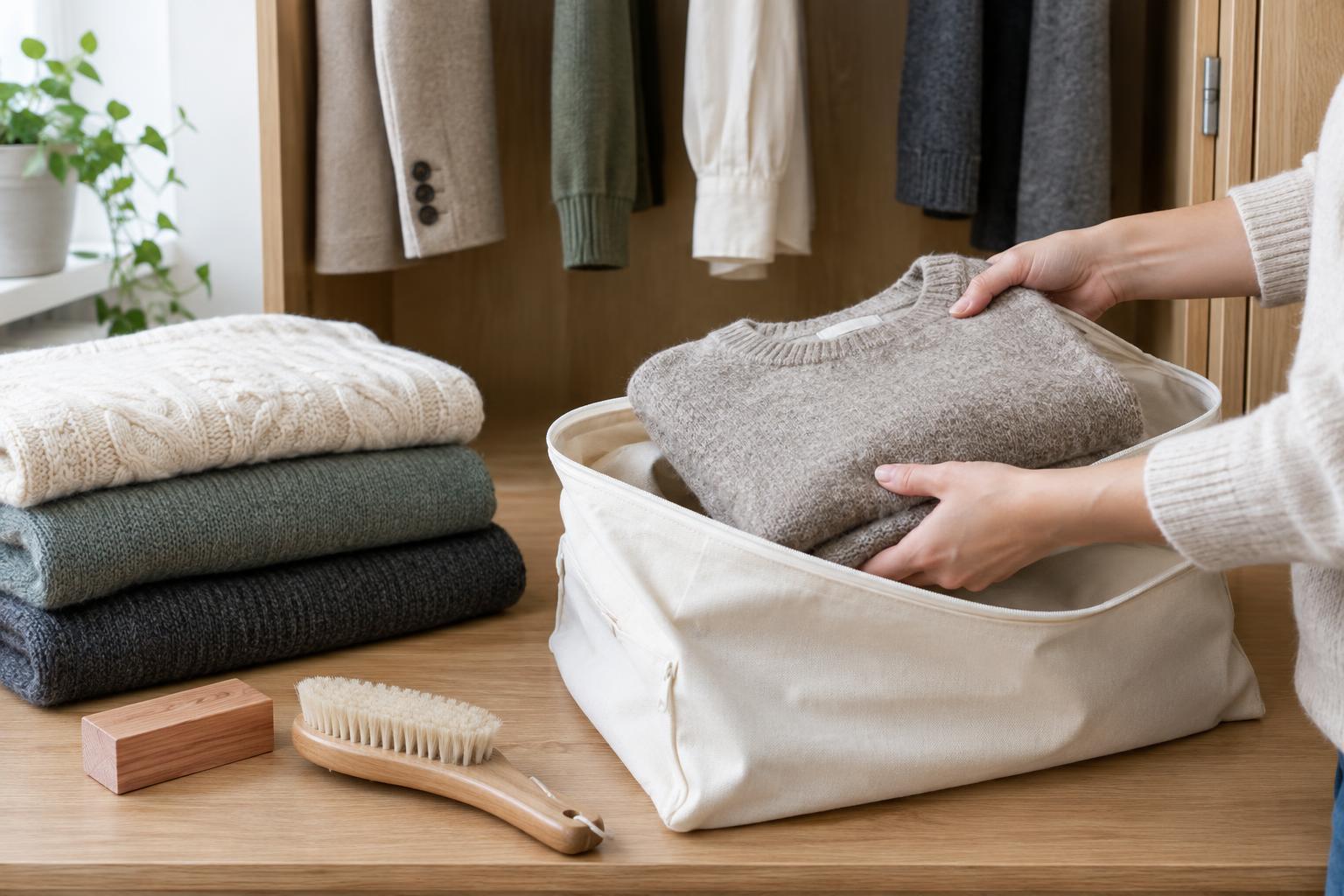
Let garments dry as their labels direct, and store knits folded rather than hanging them if hanging would stretch them. Consider where friction occurs during wear, too. Rotating the shoulder you carry a bag on, or choosing a smoother bag strap, may reduce rubbing in one spot. Small habits will not make fabric pill-proof, but they can help your clothes stay presentable for longer.