Identify the mark before you treat it
Underarm marks do not all respond to the same treatment. Fresh sweat may leave a damp area or a faint ring, while older marks can look yellow, grey or stiff. Deodorant may leave a white streak on the surface of a garment; antiperspirant and body oils can also contribute to a waxy buildup that remains after an ordinary wash. Looking closely at the mark helps you choose a treatment without working the fabric harder than necessary.
Check the care label first, especially on silk, wool, delicate blends and garments marked dry-clean only. Test any cleaning product on an inconspicuous area and let it dry before treating a visible stain. If the fabric is fragile or its colour transfers during a test, stop rather than risk a larger mark. It is often easier to remove buildup gradually over two gentle washes than to force it out with vigorous scrubbing.
Start with a gentle treatment for washable clothes
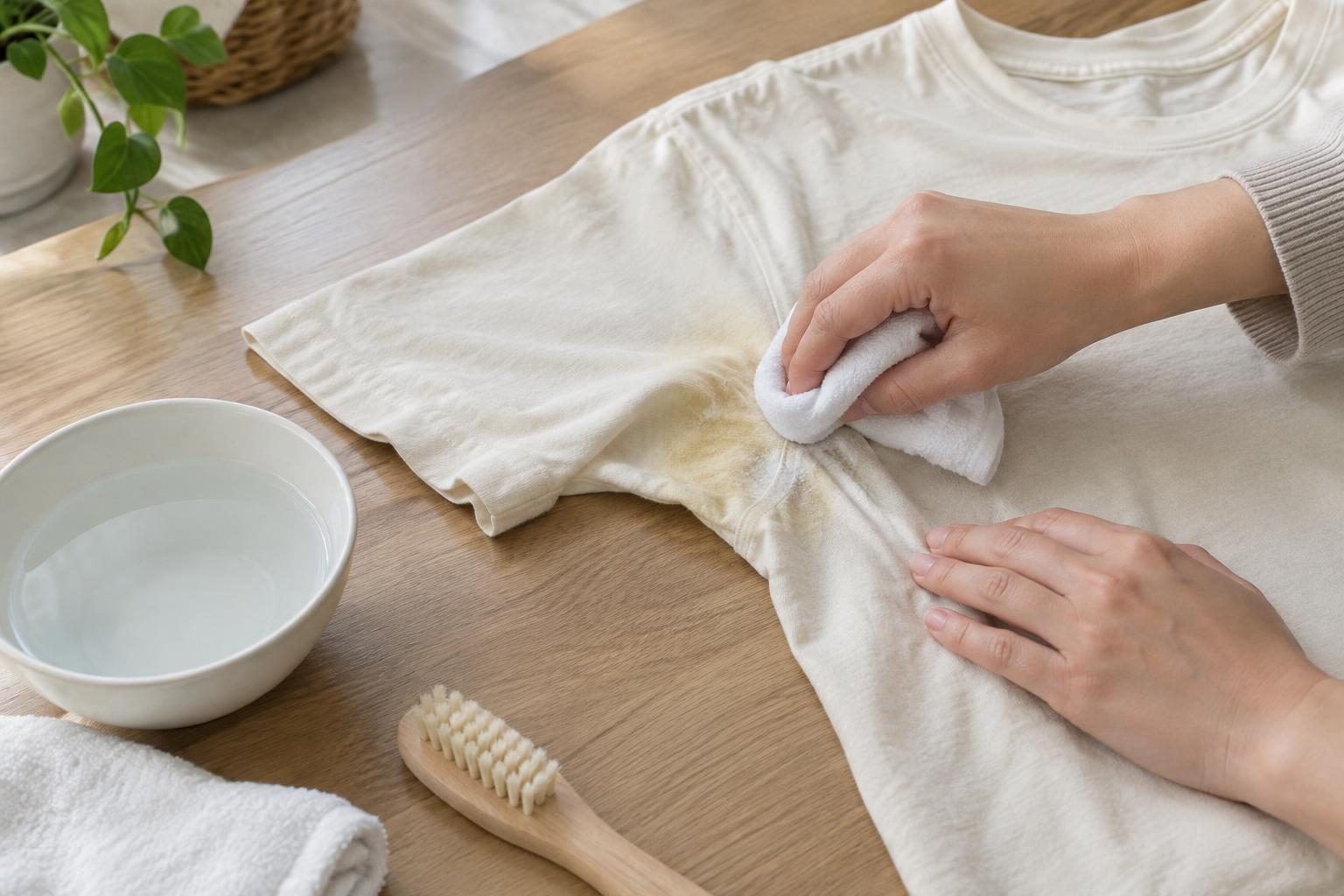
For a fresh mark on a washable cotton or synthetic garment, turn the item inside out and rinse the underarm area with cool or lukewarm water. Work from the back of the stain where possible, so the water helps carry residue out of the fabric. Apply a small amount of liquid laundry detergent directly to the area, gently work it in with your fingers and leave it for the time recommended on the product label. Then wash according to the garment’s care instructions.
Inspect the area before putting the item in a tumble dryer. Heat can make a remaining mark harder to remove, so air-dry the garment if you are unsure whether it is clean. Once dry, check both the colour and the feel of the fabric: an underarm area can look clear while still feeling coated. If residue remains, repeat the detergent treatment rather than increasing the wash temperature beyond what the care label allows.
Treat yellowing and stubborn buildup patiently
Older yellow marks may need more contact time with a suitable laundry product. For washable, colourfast garments, a detergent formulated for stain removal can be useful; follow its label for how long to leave it on the fabric. If the care label permits, an oxygen-based laundry stain remover is another option. Use only the amount and soaking time specified on its packaging. A test on a hidden area matters particularly for dark colours, prints and garments with contrasting trims.
For a waxy underarm patch, apply liquid detergent to the dry fabric first so it can reach the coating, then gently rub the fabric against itself. Rinse and wash as usual. Avoid stiff brushes, which can roughen fibres and leave a visible worn patch. Do not combine cleaning products in the hope of making a stronger treatment. In particular, never mix bleach with vinegar or ammonia. Chlorine bleach can damage some fabrics and may worsen certain underarm discoloration, so it is not a reliable first choice.
Remove white streaks without over-washing
A fresh white deodorant streak on the outside of an outfit may not need a full wash. Try lifting it with a clean, dry, soft cloth, using short, gentle strokes. On a sturdy fabric, rubbing one clean section of the garment lightly against the mark may also help. Check the result in good light rather than continuing to rub after the streak has gone.
If the mark is embedded or feels greasy, treat it as buildup with a little liquid detergent and wash the garment as its label directs. Avoid adding water to a surface streak while you are dressed: on some fabrics, a damp patch can be more noticeable than the original mark. For delicate or dry-clean-only clothing, follow the care instructions instead of experimenting with spot treatments.
Make underarm marks easier to manage
Prompt washing helps prevent sweat and product residue from accumulating. If you cannot wash a garment immediately, let it dry before placing it in the laundry basket rather than leaving it damp and bundled up. Pay attention to underarm areas when sorting clothes, and avoid overloading the machine so detergent and rinse water can move through the fabric.
Letting deodorant or antiperspirant dry before dressing may reduce transfer onto clothing. Applying only the amount you need can also limit visible residue. If a favourite garment repeatedly develops marks, check the area after each wear and treat it early. A simple routine—gentle pretreatment, a care-label-appropriate wash and a check before drying—is usually more useful than a harsh one-time fix.