Start with the event, but do not stop there
An invitation can make a particular outfit seem essential. You picture the occasion, notice a gap in your wardrobe and start looking for something that fits that single image. Before shopping, write down the actual requirements: dress code, setting, weather, activities and shoes you can comfortably wear. This separates what the event needs from what you merely feel expected to buy.
Then look at your ordinary week. Do you tend to reach for relaxed trousers, simple dresses, structured jackets or soft layers? Which colours and shapes feel natural on you? Your answers give you a starting point for an event outfit. You can dress more formally or playfully than usual without choosing something that feels like a costume.
Shop your wardrobe before you shop a store
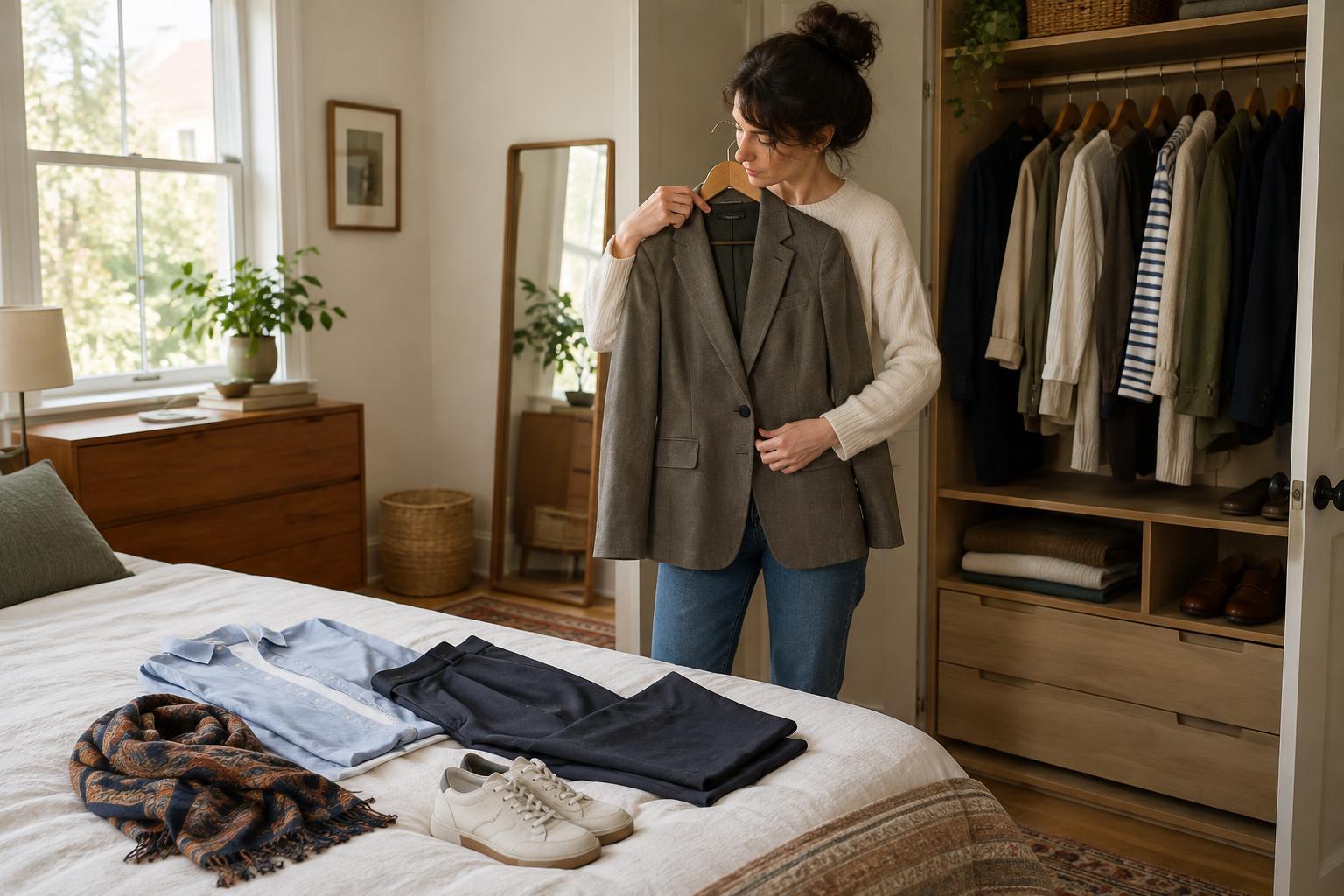
Pull out possible outfits, including pieces you have not worn recently, and try them on rather than judging them on the hanger. A familiar dress might work with different shoes; a favourite pair of trousers may only need a more polished top. Consider borrowing an accessory or altering a garment you already like if those options suit your time and budget.
Make a short list of what is genuinely missing. Be specific: “a lightweight layer that works over my sleeveless dresses” is more useful than “something nice.” This keeps the search focused and makes it easier to recognise when a purchase solves a real problem. It also leaves room to decide that you do not need to buy anything.
Use your repeat-wear test
Before buying, imagine wearing the item on three different days: the occasion itself, an ordinary outing and another realistic event. The looks need not be identical. A dress might become casual with flat shoes and a cardigan; a tailored jacket might work later with jeans. If you cannot picture the item outside one carefully staged outfit, pause before purchasing.
Versatility does not mean every piece must be neutral or plain. A bright scarf or distinctive shirt can be a useful part of your personal style if you enjoy wearing it with clothes you already own. The better question is whether you like the item itself, not only the idea of being seen in it once.
Check fit, comfort and the whole outfit
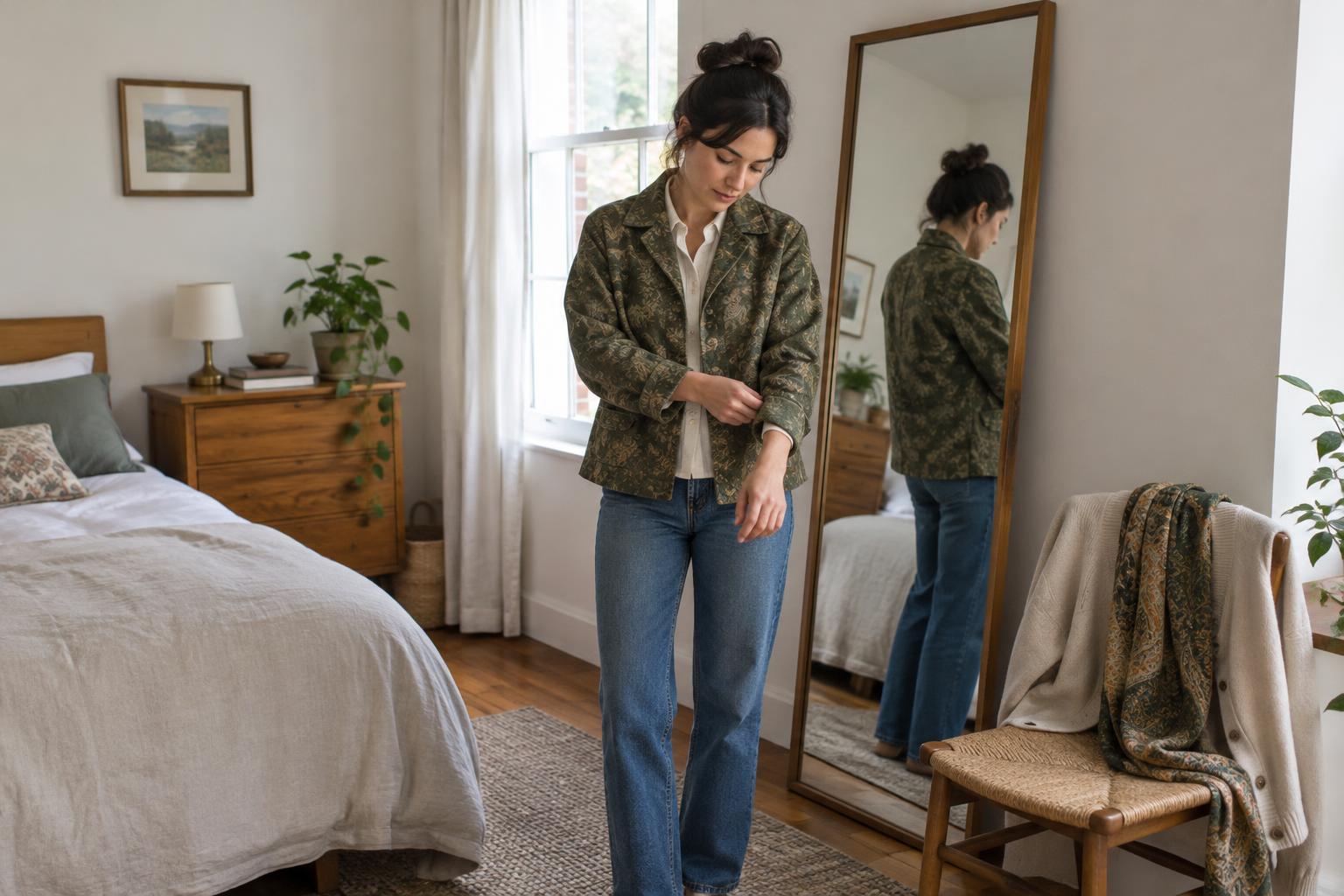
Try an item while standing, sitting and moving in ways the occasion may require. Notice whether you keep adjusting it, whether the fabric feels comfortable and whether you can wear it with underlayers and shoes you own. If alterations are needed, allow for that effort and cost before deciding it is the right purchase.
Look beyond the price tag of the main garment. A piece that requires new shoes, a specific bag and special care may be less practical than it first appears. Take a quick photo of the complete outfit if that helps you judge the proportions. Give yourself permission to leave behind something that looks attractive in isolation but does not work in your life.
Leave room for personality, not pressure
Shopping for your personal style is not about building a wardrobe in which everything matches. It is about noticing which details you repeatedly enjoy: a certain neckline, an easy silhouette, a favourite colour combination or a scarf tied your own way. Use those preferences as filters while shopping, especially when an occasion creates pressure to choose quickly.
If you do buy something for an event, plan its next outing before removing the tag. Hang it beside pieces you could wear with it, or note an outfit idea on your phone. An occasion can be a good reason to fill a wardrobe gap or try something new. The aim is to bring the new piece into your everyday style, rather than let one invitation make the decision for you.