Start with the care label
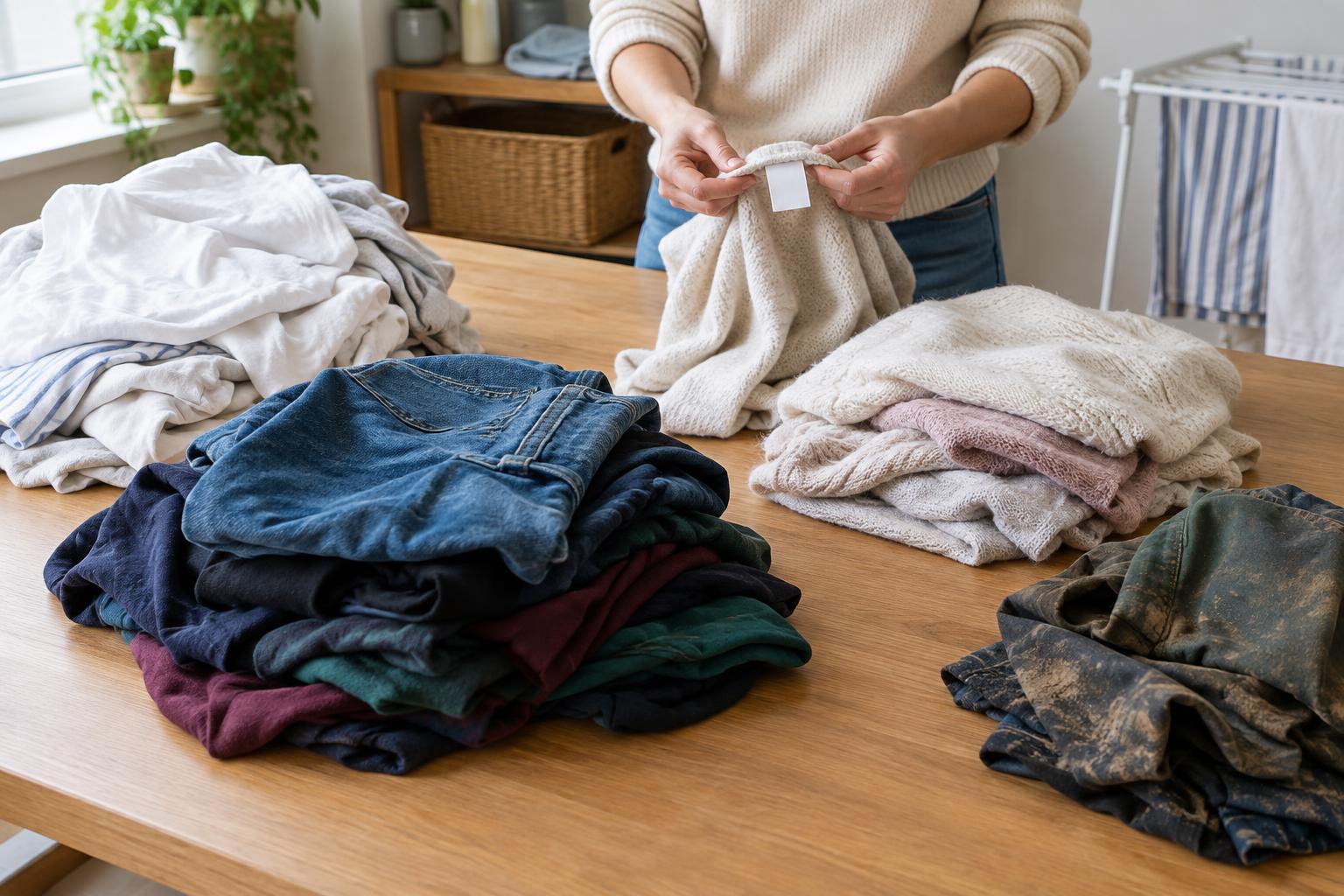
Before sorting by colour, check the care label. It tells you whether a garment can be machine washed, what water temperature it allows and whether it needs a gentle cycle. Set aside anything marked for hand washing or another special method. When two items call for different treatment, the more delicate item should determine the settings only if those settings will also clean the other item adequately.
Empty pockets, close zips and fasten hooks so they are less likely to catch on other clothes. Turn printed garments and dark items inside out if their labels allow it. These small steps will not replace sorting, but they can reduce rubbing and make a mixed load gentler on everyday clothes.
Separate colours by their risk of transferring dye
A useful starting point is three groups: whites and very pale items, dark items, and bright or saturated colours. Keeping whites apart from darks helps prevent a gradual dull or grey appearance. Bright reds, deep blues and other strongly coloured garments deserve particular attention when they are new, because excess dye may rinse out during early washes.
Colour is not the only factor. A pale wool jumper does not belong with white cotton towels simply because both are light. If you are unsure whether a garment may release dye, wash it separately or with similar colours at first, following its label. A colour-catching sheet may offer extra reassurance, but it is not a substitute for separating a garment you have good reason to suspect will bleed.
You do not need a separate load for every shade. Once you know how your clothes behave, compatible mid-tones and darker colours can often share a wash. The aim is to keep obvious dye risks away from vulnerable items, not to build a complicated system.
Group fabrics that can tolerate the same wash
Fabric weight and surface texture matter because clothes rub against one another in the drum. Towels, sturdy cottons and heavier casual clothes can be harder on lightweight shirts or fine knits. Put delicate garments in a gentler load, and use a mesh bag for items such as tights or pieces with straps that could tangle. Always check the label before machine washing wool, silk or embellished clothing.
It also helps to separate fabrics that shed lint from fabrics that attract it. Towels and some fleeces may leave fibres on dark trousers or smooth synthetic garments. Washing these groups apart can mean less time with a lint brush afterward. If you have only a small amount of laundry, combine items by choosing pieces with similar care requirements, then use the gentler suitable cycle rather than filling the machine with incompatible fabrics.
Give heavily soiled items their own plan
Soil level is an easy sorting rule to overlook. A lightly worn shirt and mud-covered trousers may be the same colour and fabric, yet they do not need the same treatment. Separate very dirty items from lightly worn clothes so loose dirt does not circulate through the whole load and so you can choose an appropriate cycle.
Deal with visible stains before washing when you can. Remove loose mud once it has dried, and follow the garment and stain-remover instructions before applying a product. Test a treatment on a hidden area if you are concerned about colour or finish. Avoid assuming that hotter water is always better: the care label may rule it out, and some stains are harder to remove after heat exposure. Do not mix cleaning products unless their instructions explicitly say it is safe.
Make a routine you can actually keep
For many households, a few laundry baskets or divided sections are enough: one for lights, one for darks and colours, and a place for delicates or heavily soiled items. Sort again before loading the machine, since a garment’s fabric or care label may call for a different group. Leave enough room for items to move freely, and measure detergent according to its directions rather than adding extra for a difficult load.
The best system is flexible. A new red top may need a cautious solo wash, while familiar everyday clothes may be easy to group. If an item repeatedly comes out stained, covered in lint or misshapen, adjust the group it goes in next time. Sorting is less about following rigid colour rules than about giving each garment a wash that suits its dye, fabric and level of dirt.