Start by naming what feels off
An unfinished outfit is not necessarily missing an accessory. Sometimes the clothes work separately, but together they do not quite express what you intended. Before changing anything, ask a more specific question than “What should I add?” Does the outfit feel too casual for your plans? Does one piece draw more attention than you want? Is it comfortable when you stand still but awkward when you move? The answer gives you a direction instead of sending you to the jewellery box by default.
It helps to check the outfit in the conditions in which you will wear it. Put on the shoes you plan to use, carry your usual bag, and try any coat or outer layer you will need. A look that seems incomplete in front of a mirror may make sense once its practical pieces are in place. Equally, shoes or a coat can reveal a mismatch that was not obvious before.
Check fit and proportion before adding details
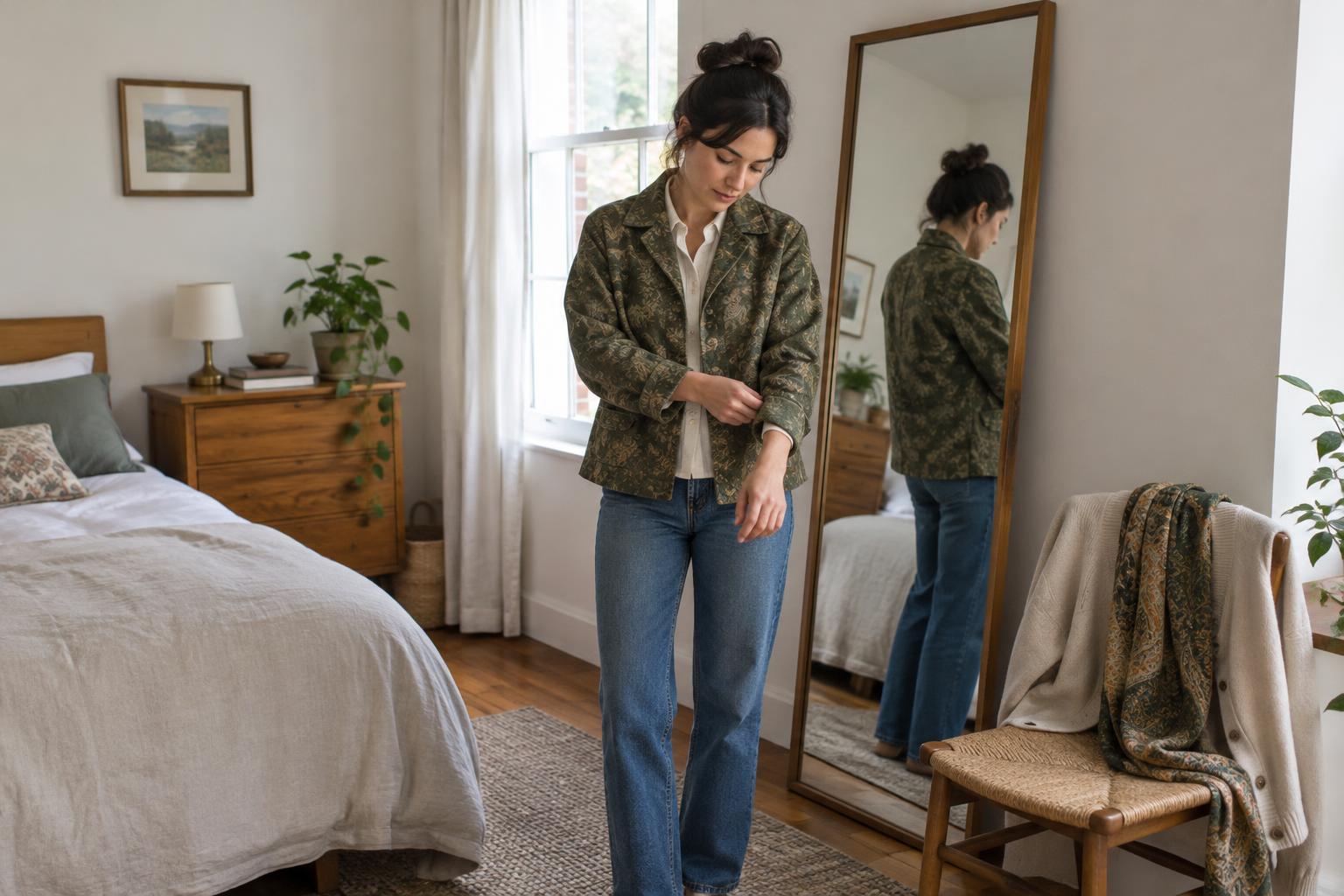
If an outfit looks slightly unsettled, look first at how the pieces meet. A long, loose top over wide trousers may obscure the shape you wanted, while a short top with a high waistband may leave more visual space than you prefer. Neither combination is wrong. Try a small adjustment: tuck only the front of the top, roll a sleeve, or change where a cardigan falls. These changes can make the same clothes feel more deliberate.
Pay attention to comfort as well as appearance. A collar that needs constant arranging or trousers that shift when you walk can make an outfit feel unfinished because you never stop thinking about it. If a piece requires repeated fixing, swapping it may do more than adding another layer. The aim is not a particular silhouette; it is an outfit you can wear without managing it all day.
Look for a connection between the pieces
An outfit often feels cohesive when its parts have a reason to sit together. That connection might be a shared colour, a similar level of formality, or a contrast you have chosen on purpose. For example, relaxed jeans and a crisp shirt can work well because the contrast is clear. If one item seems isolated, consider repeating a small element elsewhere: a colour from a printed scarf in your shoes, or the soft texture of a knit in another accessory.
You do not need to match everything. In fact, too many exact matches can feel more planned than you want for an ordinary day. Try looking at the outfit from a short distance and asking which piece catches your eye first. If it is the piece you want to feature, the outfit may already be doing its job. If your eye keeps jumping between competing details, removing one may create a stronger connection than adding another.
Use accessories to solve a specific problem
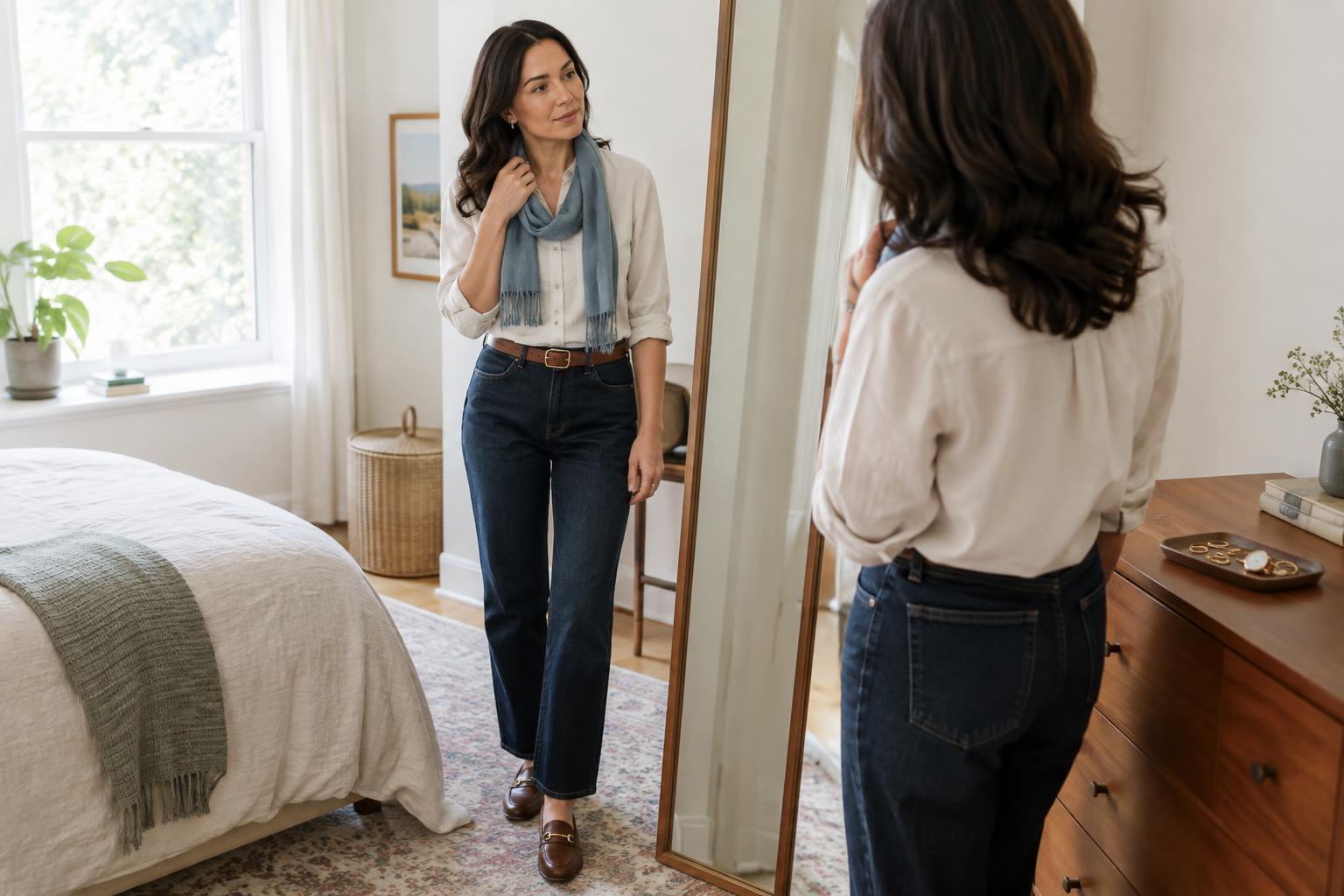
Accessories are most useful when they have a purpose. A belt can define a waist or keep trousers comfortably in place. A scarf can introduce colour near your face, soften a neckline, or add warmth. Earrings can bring a little detail to an outfit whose clothes are intentionally plain. Choose the item that addresses what you noticed rather than treating accessories as a required final step.
Try one change at a time. Add the scarf, then look again before reaching for a necklace or changing the bag. If the look begins to feel crowded, take something away. The same principle applies to layers: a jacket may make a simple shirt and trousers feel ready for your plans, but another layer is not automatically an improvement. An accessory earns its place when it makes the outfit more useful, comfortable, or recognizably yours.
Know when simple is complete
Sometimes the feeling that an outfit is unfinished comes from expecting every look to have a noticeable finishing touch. A plain top, well-fitting trousers, and comfortable shoes can be a complete outfit. Simplicity may be exactly what you want for a busy day, especially if the colours, fit, and level of ease already suit your plans. You do not have to make a look more interesting to make it valid.
If you are still unsure, give yourself a brief final check: Can you move comfortably? Does the outfit suit where you are going? Is there one adjustment you genuinely want to make? If the first two answers are yes and the last is no, consider leaving it alone. Getting dressed is not a puzzle that always needs one more piece; sometimes the finishing touch is deciding you are ready.