Look for the idea behind the outfit
A saved outfit is a starting point, not a set of instructions. Instead of asking how to copy every piece, ask what drew you to it. It might be the relaxed shape of the trousers, a scarf worn with a simple shirt, or the contrast between a soft knit and structured shoes. Naming that detail gives you something useful to work with, even if the original outfit is too formal, expensive, or impractical for your day.
Collect a small group of looks you return to rather than an endless assortment of appealing images. Then notice what repeats. Are you drawn to clear colour contrasts or closely related shades? Neat layers or loose silhouettes? One expressive accessory or several small details? Repetition can reveal a preference, while an unusual look may simply be something you enjoy seeing on someone else.
Filter inspiration through your actual week
Think about the places you regularly go and what you need to do there. An outfit for a day spent walking, commuting, and carrying a bag has different demands from one for sitting indoors. Consider the temperatures you dress for, the shoes you can comfortably wear, and any dress expectations you encounter. These details do not limit personal style; they help you choose versions of it that you will use.
It can help to separate your week into a few familiar situations, such as workdays, errands, and relaxed social plans. Compare your inspiration with the situation in which you would wear it. If you love a tailored look but need easy movement, try the same crisp-and-relaxed balance with a comfortable jacket and trousers you can move in. If you admire dramatic layers but often feel warm, bring in the effect through colour or a lighter accessory instead.
Translate the look using your own wardrobe
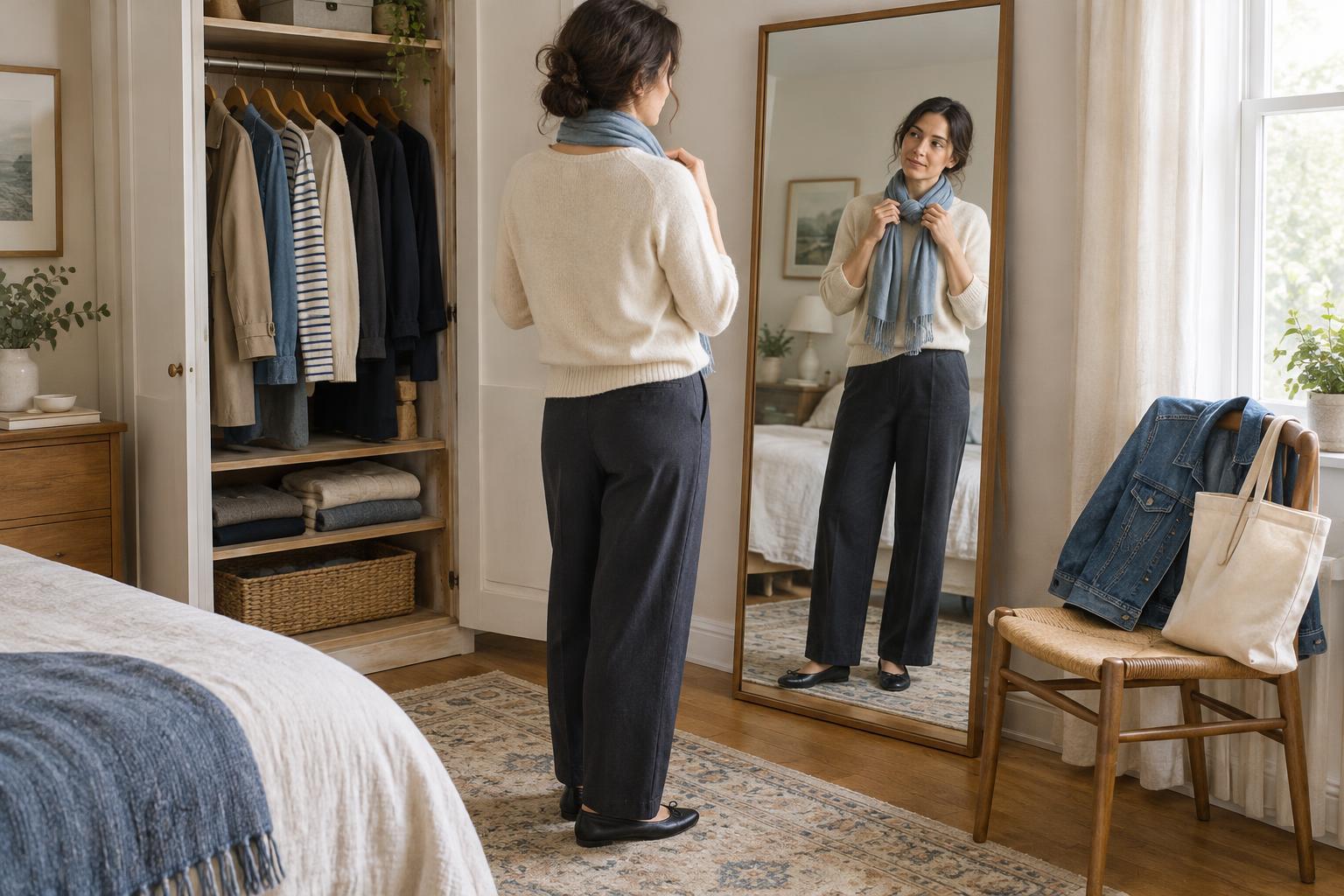
Before shopping, build an outfit around the idea you identified. You do not need exact substitutes. A long coat in an inspiration photo might represent a clean, uninterrupted shape; a cardigan worn open over similar colours could create a related effect. A brightly patterned blouse might suggest a small accent of colour that you can introduce with a scarf or bag.
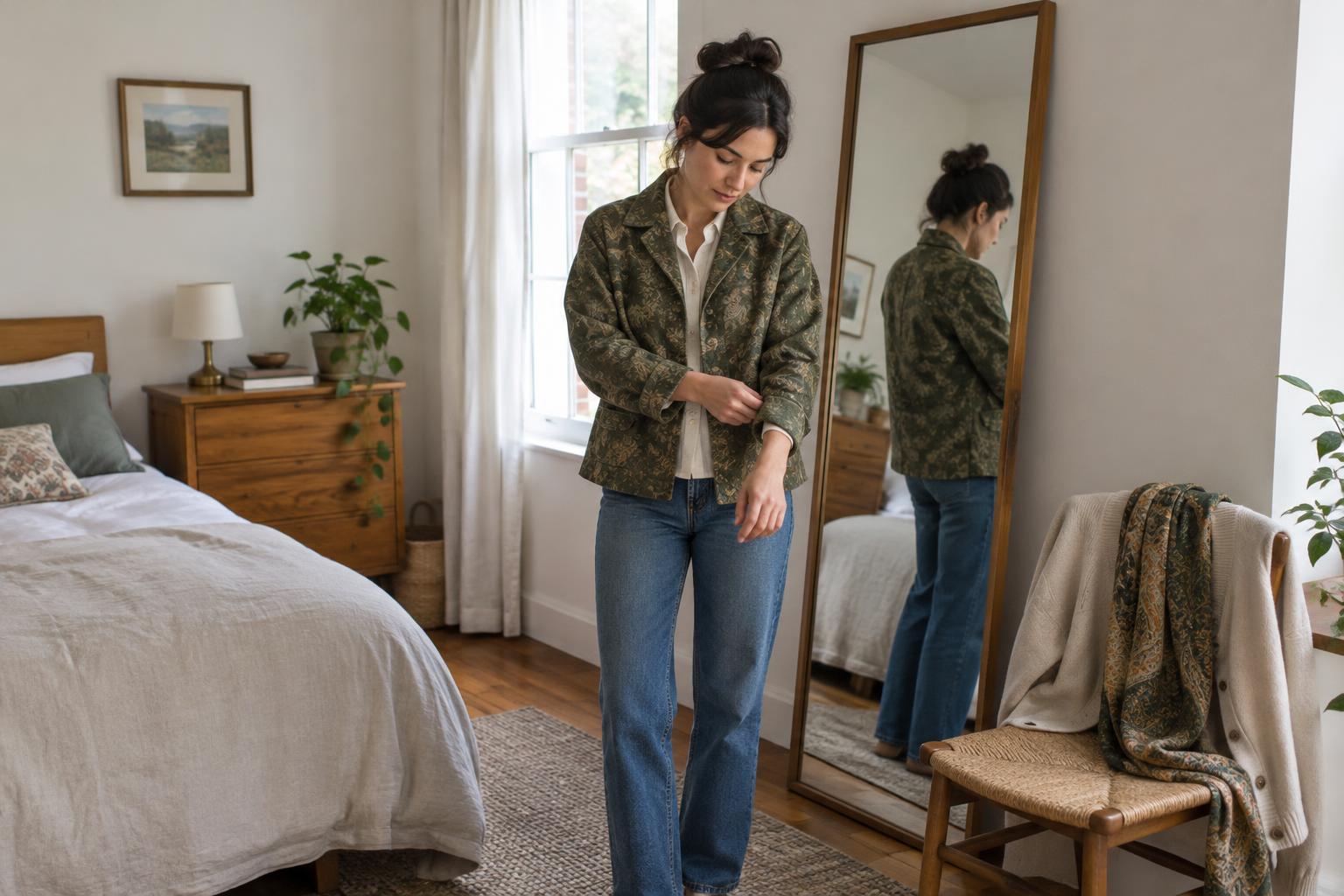
Start with one reliable item you already wear, then change one element at a time. Try a different proportion by tucking a top, rolling a sleeve, or pairing a fuller lower half with a closer-fitting upper half. Alternatively, keep the shapes familiar and experiment with a new colour combination. Small changes make it easier to tell what works and keep the outfit feeling like yours.
Wear the trial outfit, not just the mirror version
An outfit can look convincing for a minute in front of a mirror and still be frustrating by lunchtime. Wear a new combination for an ordinary stretch of your day when you can. Notice whether you can sit, walk, reach, and manage your usual belongings without constant adjustments. Also pay attention to whether you feel comfortable being seen in it. These observations are more useful than deciding whether an outfit matches its inspiration perfectly.
If something feels off, change one detail before abandoning the whole idea. Different shoes may make the proportions feel natural. Removing a layer may make the outfit easier to wear. You might enjoy a vivid colour near your face but prefer it in a small scarf rather than a full garment. Keep a brief note of combinations that worked, including the shoes and outer layer; those details are easy to forget.
Shop for the missing role, not the photograph
After trying a few outfits, you may find a genuine gap. Define it by the job the item needs to do: perhaps a washable top that works under a jacket, or comfortable shoes that suit several of your preferred outfits. Check whether a possible purchase works with clothes you already own and suits the situations in which you plan to wear it. An item that looks perfect in isolation may be less useful if it requires several other purchases.
Your style can change without needing a complete wardrobe reset. Keep the ideas that make getting dressed easier, adapt those that almost work, and let the rest remain inspiration. The aim is not to reproduce an image exactly. It is to build outfits that carry the qualities you like into the life you actually lead.