Start with a guide, not a colour limit
The three-colour rule is a simple way to give an outfit a sense of direction: choose a main colour, a supporting colour and, if you want one, an accent. It can be useful when a wardrobe contains pieces you like but combining them feels difficult. Instead of asking whether every item matches every other item, you have a smaller question to answer: what role does each colour play?
There is no need to count with absolute precision. An outfit with two colours may feel complete, while one with four or five may look cohesive because several shades are closely related. The point is to notice where the eye goes and whether the colours feel intentional to you. Treat three as a starting structure, not a test you can fail.
Choose a base before adding contrast
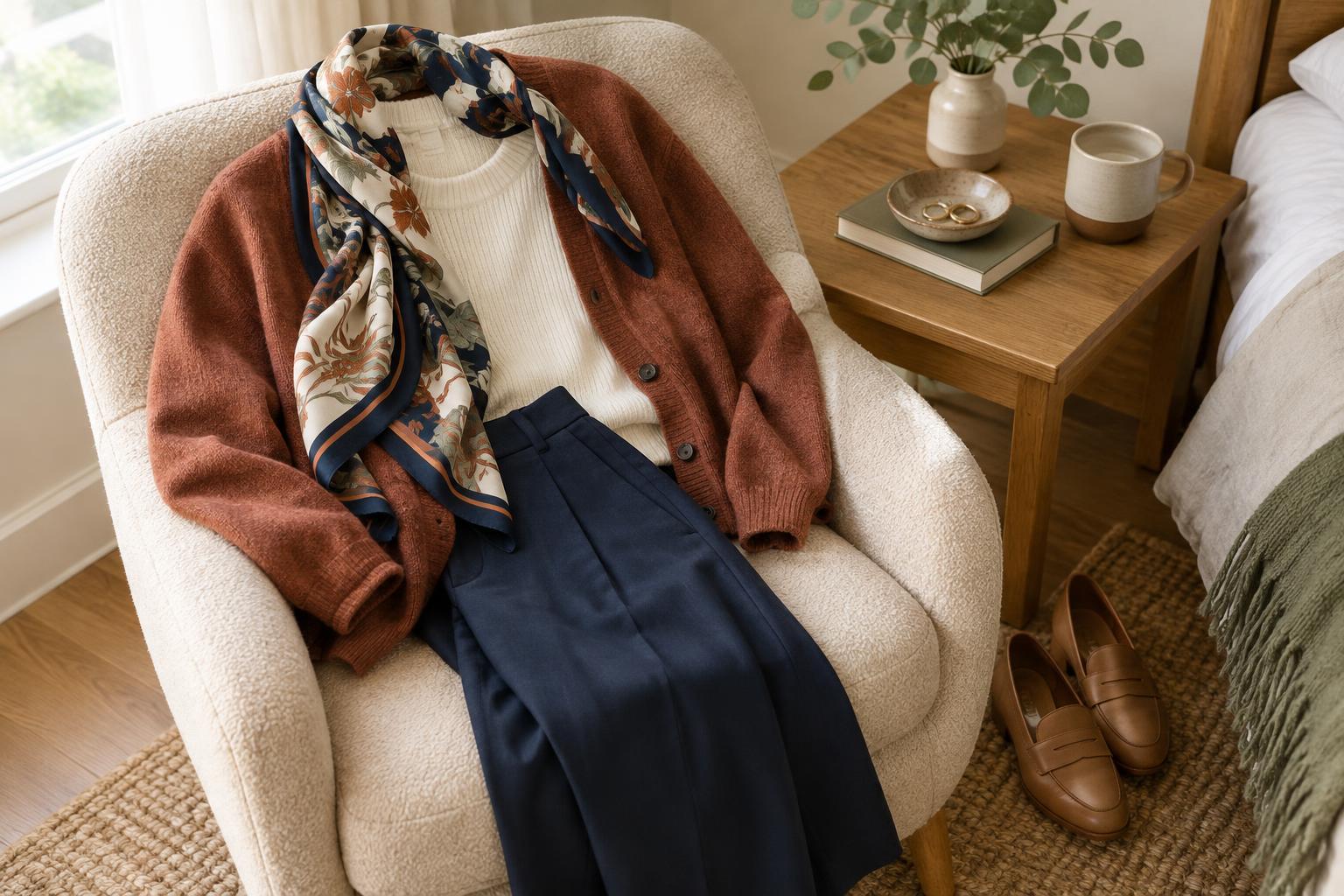
Begin with the piece that is hardest to change or that you most want to wear. It might be a pair of trousers, a dress or a patterned shirt. Let its dominant colour become the base, then choose a second colour that works alongside it. For example, navy trousers and a cream knit establish a clear foundation. A rust scarf could provide a third colour without requiring any more decisions.
The colours do not need equal space. Often the base takes up the most area, the supporting colour gives the outfit definition, and the accent appears in a smaller detail. If you prefer a quieter look, use two familiar neutrals and keep the accent subtle. If you enjoy bolder combinations, let the supporting colour be bright and skip the accent altogether. What matters is the balance you want to wear.
Decide what counts as a separate colour
Black shoes, a silver buckle, blue jeans and a striped top can make strict counting feel impractical. A helpful approach is to count colours that draw attention rather than every visible detail. Hardware, small logos and minor pattern details usually do not need their own place in the plan. Denim can act as a neutral in one outfit and as the main blue element in another; its role depends on what surrounds it.
Shades within one colour family can also work as a single idea. A pale blue shirt with dark blue trousers creates variation without necessarily feeling like two unrelated colours. The same applies to cream and warm beige if their tones sit comfortably together. Rather than sorting shades into exact categories, step back and notice the overall impression. If the outfit reads as calm and connected, the precise count is not important.
Let prints and accessories do more than one job
A print can offer a ready-made colour plan. Look at a patterned scarf, skirt or shirt and pick out one colour to repeat elsewhere. A scarf with green, cream and brown, for instance, may connect a green top to brown shoes while adding interest near the face. You do not have to repeat every shade in the print; choosing one is often enough to make the combination look considered.
Accessories are also a low-commitment way to try a new colour. If you usually wear charcoal and white, a red bag or a pair of red socks can test how that accent feels in your everyday clothes. Equally, you can leave accessories in the background. Shoes and bags that blend with a base colour may be more useful than ones chosen solely to satisfy a rule.
Adjust the rule to suit the day and your taste
Before getting dressed, decide what you need the outfit to do. A low-key day might call for a close range of colours and little contrast. On a day when you want a more noticeable look, a stronger accent may feel right. Texture can provide interest when you use fewer colours: a crisp cotton shirt, soft knit and worn-in denim will not look identical simply because their colours are restrained.
Use a quick final check instead of recounting everything. Is there a colour that feels disconnected? Could an accessory repeat it, or would removing that piece make the outfit easier to wear? If you like the result as it is, stop there. The best use of the three-colour rule is to help you make decisions, then let you move on with your day.