Start with the clothes you actually wear
A colour inventory is a record of the colours in your wardrobe and the roles those colours play in your outfits. It is not a test of whether your wardrobe follows a particular palette. Its purpose is to show what you can put together easily, where you have limited options and which colours you enjoy wearing.
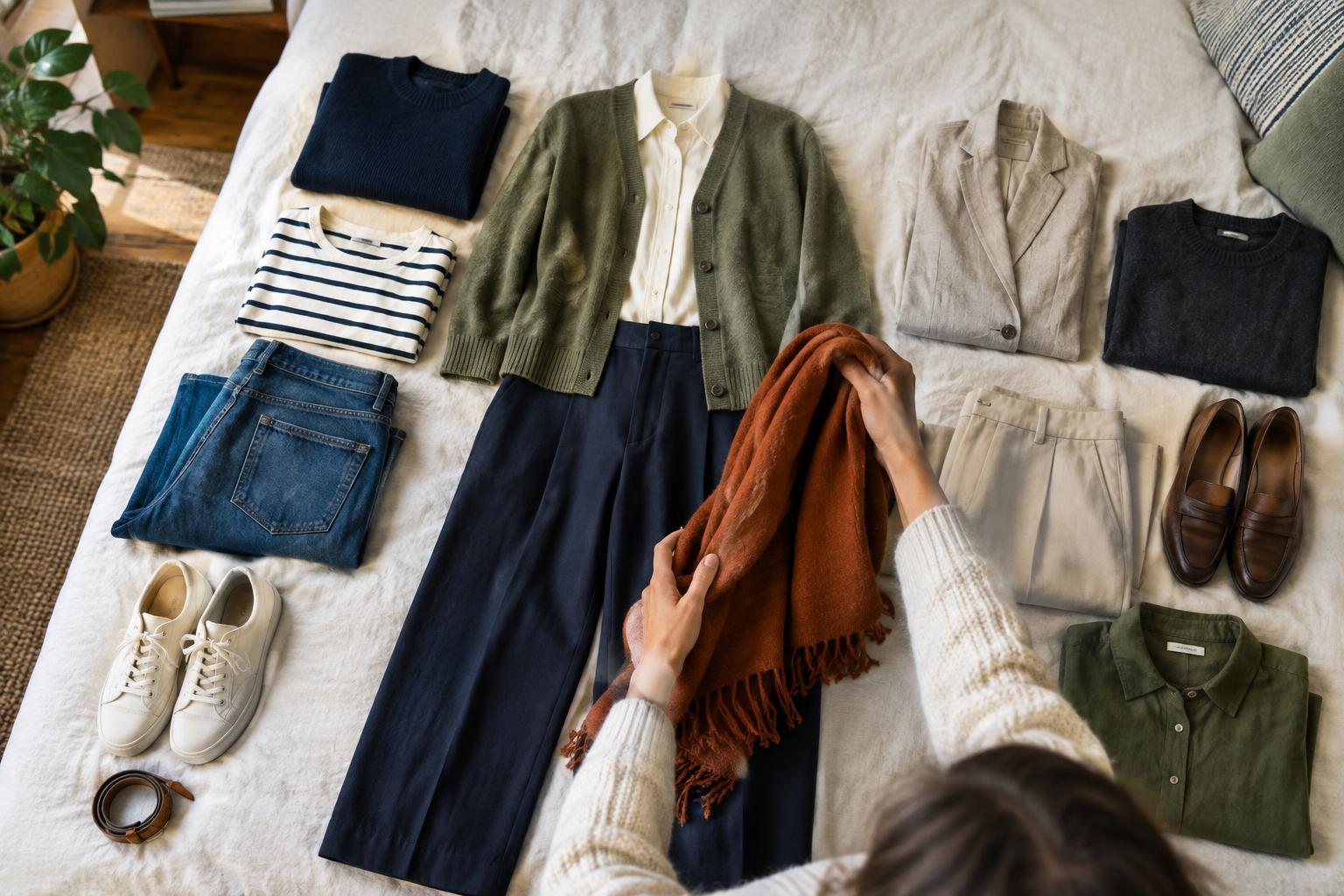
Gather the clothes you wear in a typical season, or make a list if taking everything out is impractical. Include shoes, outerwear and accessories: a coat or scarf may affect more outfits than an occasional top. Set aside items that no longer fit, need repair or belong to another season, but note them separately if you expect to use them again. This keeps the inventory focused on choices available to you now.
Record colour and clothing role together
Make a simple table or handwritten list with a row for each item. Note its colour, type and how often you wear it. Broad colour names are enough to begin with, though it can help to distinguish light blue from dark blue or warm brown from cool grey if those differences affect your outfits. For patterned pieces, record the main colour and one or two noticeable supporting colours.
Next, group items by role: everyday bottoms, tops, layers, outerwear, shoes and accessories. This matters because a wardrobe with ten blue tops and one pair of blue trousers does not offer the same outfit options as a balanced spread of blue items. Mark pieces you reach for regularly, along with pieces that are difficult to style. The aim is not to count colours for their own sake, but to connect the counts to getting dressed.
Look for gaps in outfits, not just on the page
Once you can see your colours by category, try building several outfits for ordinary situations in your life. Pick a bottom, add a top, then choose any layers, shoes and accessories you would need. Notice where the process stalls. Perhaps your favourite rust-coloured top works with one pair of trousers but none of your other bottoms. Perhaps most of your light-coloured tops need a layer you do not own. These are more useful observations than simply deciding you need another neutral.
Separate a colour gap from a garment gap. If you have suitable colours but no comfortable trousers for a particular occasion, colour is not the main problem. If you have plenty of trousers but few tops you like wearing with them, the combination may need attention. Consider laundry and weather as well: an outfit that works only when one specific item is clean may not be a dependable option.
Check whether a gap needs filling
An empty space in your inventory is not automatically a shopping list. You may own no yellow clothes because you do not enjoy wearing yellow. You may rely on one dark coat because it suits all the outfits you wear with it. A useful gap is one that repeatedly gets in the way of outfits you want to wear, using clothes that fit your preferences and daily activities.
Before adding anything, experiment with what you have. Try an unfamiliar pairing, change the layer or use a scarf to connect two colours that initially seem separate. You can also identify an item that needs mending or care rather than replacement. If you still see a gap, describe the job the missing piece would do: for example, “a washable mid-tone top that works with my navy trousers and brown skirt” is clearer than “more colour.”
Use the inventory as a flexible guide
If you decide to look for a new piece, compare its colour with several items you already own. Ask whether you would wear those combinations, not merely whether the colours can be paired. A shade that looks appealing on its own may be less useful if it calls for shoes, layers or care habits that do not suit your routine. Equally, a distinctive colour can earn its place if you enjoy it and can see yourself reaching for it.
Revisit your inventory when your needs change or when getting dressed starts to feel difficult again. You do not need to maintain a perfect spreadsheet. A short list of dependable combinations, awkward items and possible gaps can be enough. The best result is a clearer understanding of your wardrobe: which colours already support you, which combinations deserve another try and which additions, if any, would make everyday outfits easier.