Start with an outfit you already like
An accent colour is a colour that stands out against the rest of an outfit. It might appear in a scarf, a shirt, a pair of shoes or a small detail on a bag. The aim is not to make every item match. It is to give the eye a point of interest while keeping the outfit easy to wear.
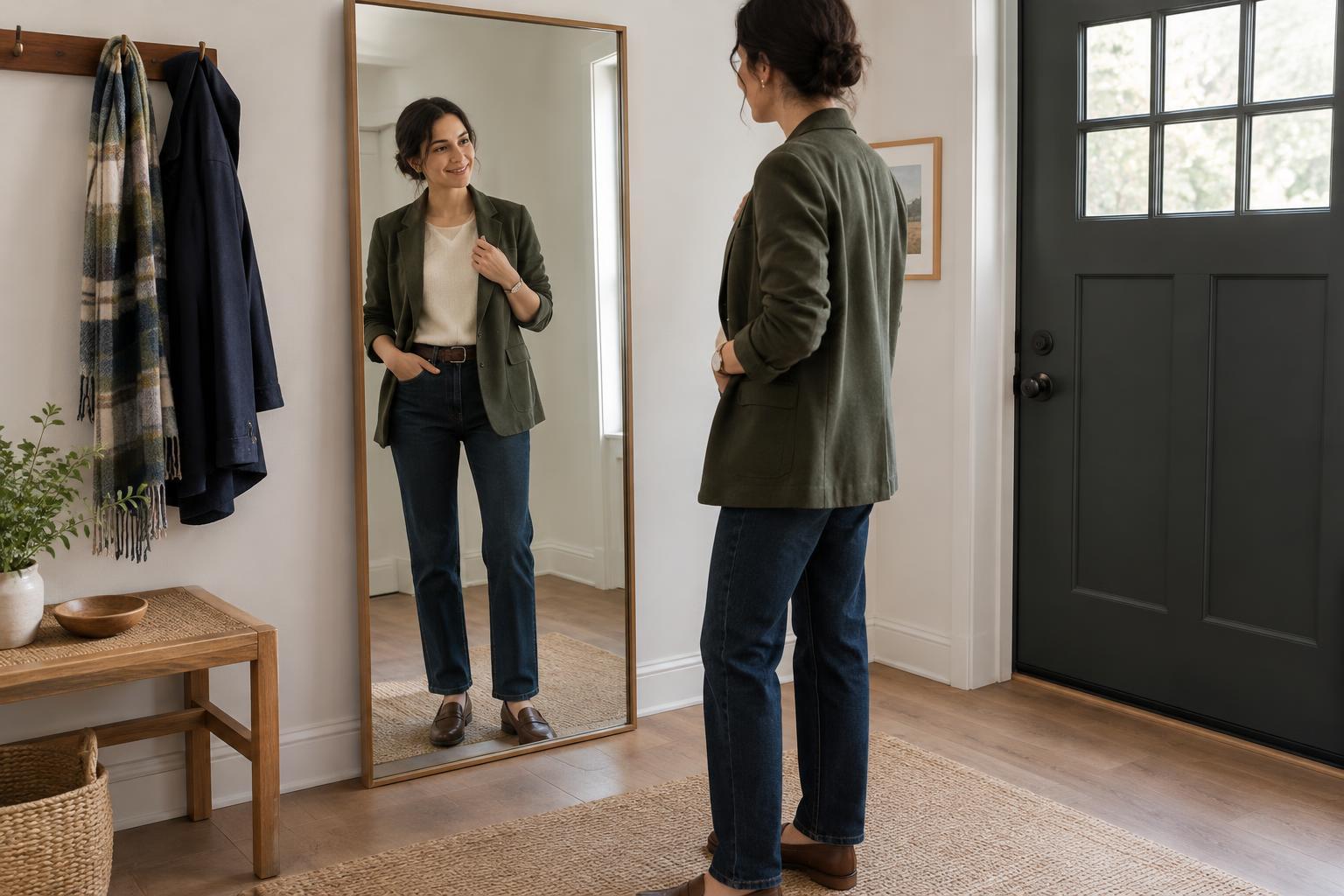
Begin with a combination you would happily wear without the accent: perhaps dark trousers and a light top, or jeans with a simple knit. Then add one coloured piece and see what changes. Starting with familiar clothes makes it easier to judge whether the colour adds something you like, rather than trying to solve several outfit decisions at once.
Choose a colour you want to wear
You do not need to identify a perfect shade before you begin. Look at colours you already reach for in clothes or accessories. A colour you enjoy seeing is more useful than one chosen only because it is supposed to suit you. If you are unsure, try it in a piece you can remove easily, such as a scarf or bag.
Consider how strong a contrast you want. A deep green accessory against navy may create a quiet shift, while a bright red accessory against the same outfit will draw more attention. Neither approach is better. Hold the coloured item next to your base outfit in ordinary light and decide whether the combination feels comfortable to you.
Decide where the colour should go
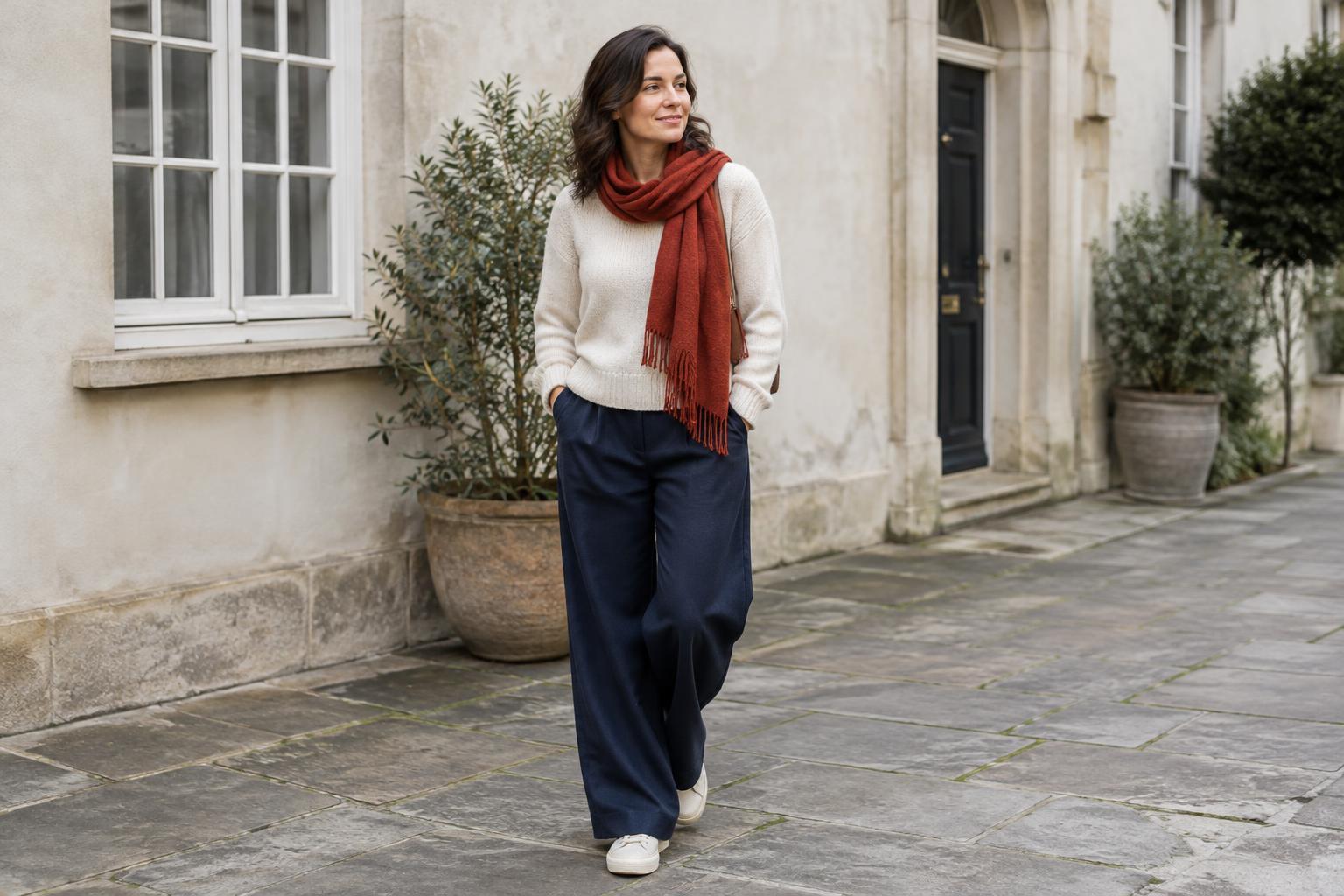
Placement changes the effect of an accent. A scarf, collar or earrings bring colour close to your face. Shoes add interest farther from your face and can give a simple outfit a distinct finish. A bag is easy to move between outfits, while a coloured top makes the accent a larger part of what you wear.
The size of the item matters as much as its location. A slim belt adds a narrow line of colour; a coat covers much more of the outfit. If a bright shade feels like too much, use it in a smaller area or choose a softer version of it. If the colour feels lost, give it more space rather than adding several competing accents.
Use repetition only when it helps
One accent does not have to appear in only one item. A scarf with a small amount of blue can connect with blue shoes, for example, while the rest of the outfit stays simple. Repetition can make separate pieces feel related, but exact matching is optional. Similar shades or a subtle detail may be enough.
Before adding another coloured piece, look at the outfit as a whole. If your first accent already gives it the interest you wanted, stop there. If the colour seems isolated, try a small echo elsewhere. You can also connect pieces through texture or shape instead of colour: a smooth leather bag and smooth leather shoes may feel cohesive even when they are different shades.
Make the idea work with your wardrobe
Try one accent colour with two or three base outfits you wear often. A rust scarf, for instance, might work with denim and cream on one day and charcoal and white on another. Testing the same item in several combinations shows whether it earns a place in your regular rotation. It also helps you notice which bases make the colour feel lively, calm or difficult to use.
Take a moment to assess the outfit before you leave: is the accent visible enough for your taste, and can you move comfortably through your day? If you enjoy the result, remember the combination or take a photo for your own reference. Over time, a few reliable pairings can make getting dressed quicker without turning colour into a set of rigid rules.