Start with the care label
Before filling a sink or choosing a wash cycle, check the sweater’s care label. Wool garments vary: a delicate, loosely knitted sweater may need different handling from a tightly knitted, machine-washable one. The label is the best starting point for deciding whether to hand-wash, use a machine’s wool cycle or take the garment to a cleaner. If it says dry clean only, avoid experimenting with a full wash, particularly if the sweater has a lining, trim or structure that could change when wet.
Wool does not necessarily need washing after every wear. If a sweater looks clean and has no lingering odour, airing it between wears may be enough. A small mark can sometimes be treated locally instead of soaking the whole garment. Less frequent washing also means less handling of the fibres, which can help a favourite sweater last longer.
Understand what causes shrinkage and felting
The safest approach to washing wool is to limit heat, sudden temperature changes and vigorous movement. Many wool fibres have a textured outer surface. When they are repeatedly rubbed or agitated while wet, the fibres can catch on one another and tighten into a denser fabric. This is felting. A felted sweater may look smaller, feel thicker and lose the definition of its stitches.
Shrinkage can also reflect changes in a knit’s shape after washing and drying. That is why gentle washing alone is not the whole answer: how you lift, support and dry a wet sweater matters too. Once wool is substantially felted, stretching it is unlikely to restore its original texture and dimensions. Prevention is much more reliable than trying to reverse the damage.
Hand-wash with as little movement as possible
For a sweater whose label permits hand-washing, use a clean basin or sink filled with cool or lukewarm water. Add a small amount of detergent intended for wool or delicate garments, following its dosage instructions. Too much detergent can be difficult to rinse out. Submerge the sweater and gently press it into the water, supporting its weight rather than pulling on the sleeves or neckline. Let it soak briefly if needed, but avoid scrubbing, twisting or rubbing sections of the knit together.
Drain the water and rinse with water at a similar temperature. A sudden switch from warm to cold is best avoided. Press gently to move water through the fabric until the detergent is removed; do not wring it out. If you are treating a mark before washing, test your method on an inconspicuous area and blot carefully. Rubbing a stain hard can change the surface of the wool even if the mark disappears.
Use the machine only when the label allows it
If the care label explicitly allows machine washing, choose a wool or delicate cycle at the temperature it specifies. Use a suitable detergent and avoid a heavily loaded drum, which can increase friction. Turning the sweater inside out and placing it in a mesh laundry bag may help protect it from snagging on other garments. Wash it with similarly delicate items rather than towels, jeans or clothing with rough fastenings.
Do not assume that every cycle labelled “gentle” is appropriate for every wool sweater. Follow the garment label for settings, including spin speed, and skip the machine if you are unsure whether it is washable. Remove the sweater promptly when the cycle ends. Leaving a damp knit bunched up can create creases that are awkward to smooth out later.
Dry flat and store without stretching
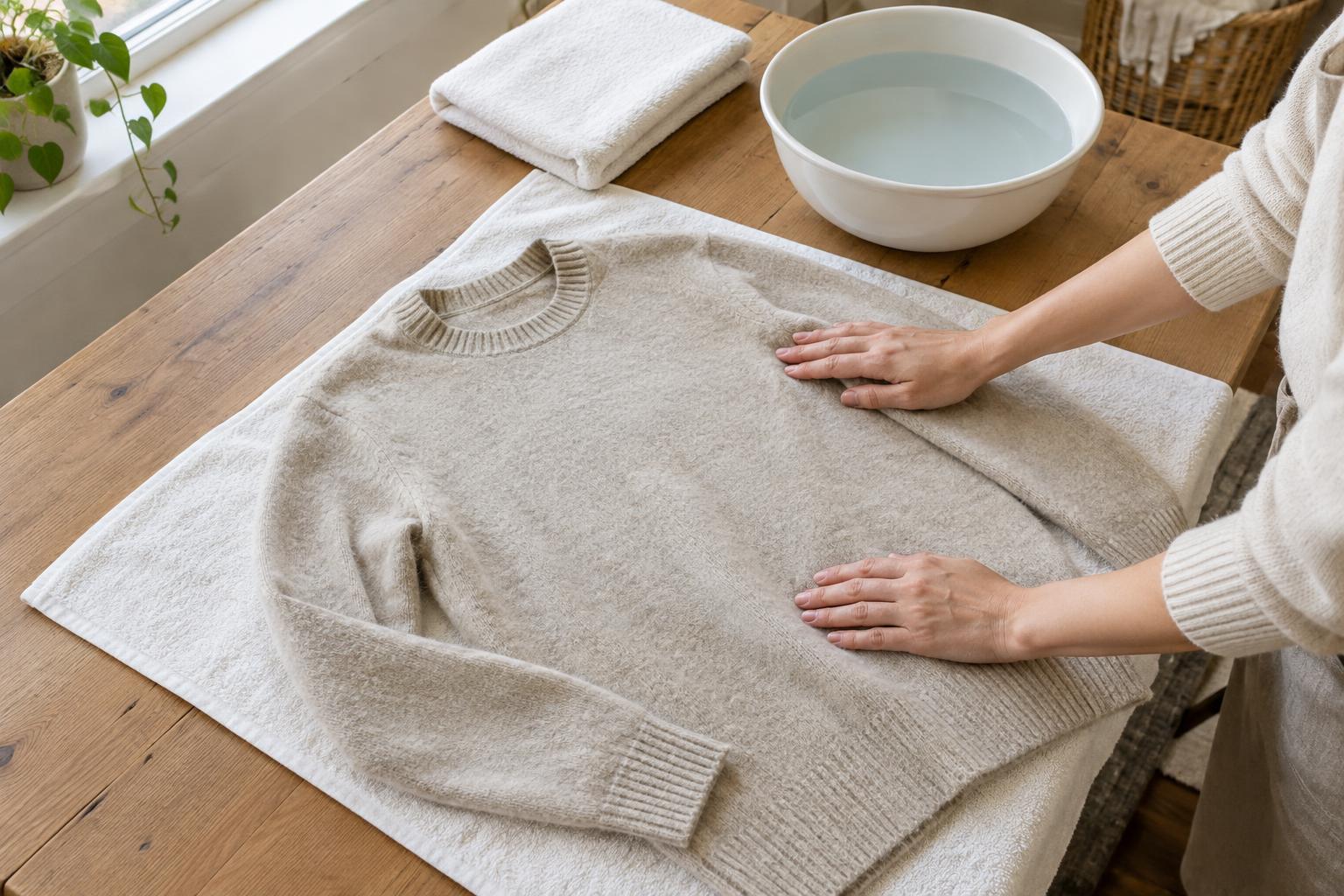
A wet wool sweater can be surprisingly heavy. To remove excess water after hand-washing, lay it on a clean towel, roll the towel up and press gently. Unroll it, then place the sweater flat on a dry towel or a flat drying rack. Ease the body, sleeves, cuffs and neckline back toward their usual shape without tugging. Keep it away from direct heat, and turn it over or replace the towel if the underside remains damp.
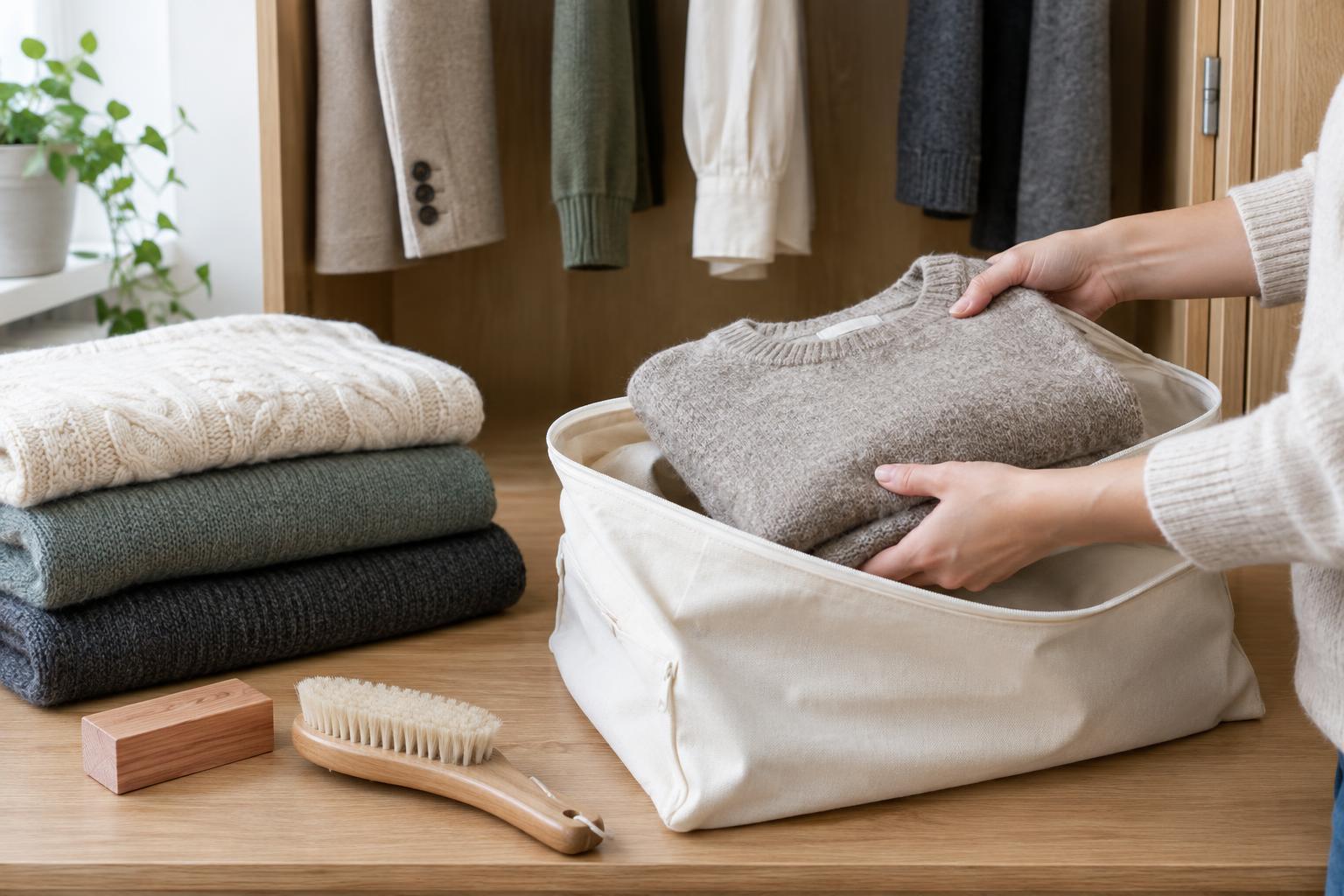
Avoid hanging a wet sweater: its weight may pull the shoulders and hem out of shape. Unless the care label specifically permits tumble drying, let it air-dry completely before putting it away. Fold rather than hang it for storage, so the shoulders do not gradually stretch. With a label-led washing routine, restrained handling and flat drying, wool sweaters are easier to keep comfortable and wearable season after season.