Start with two prints you already like
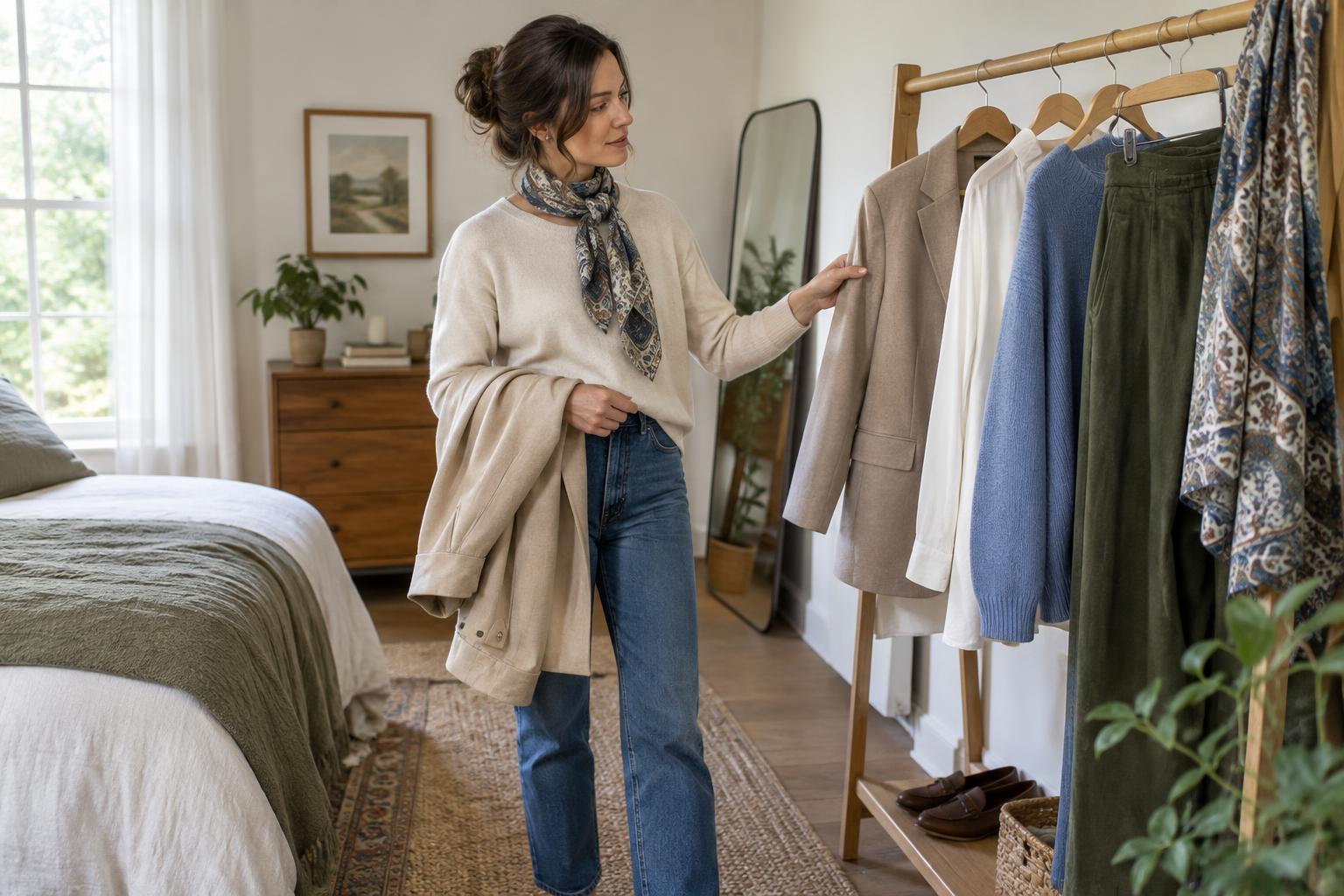
Mixing prints does not require a wardrobe full of statement pieces. Start with two patterns you would happily wear on their own, such as a striped top and a floral scarf. The aim is not to make the prints match perfectly. It is to give the eye a reason to see them as part of the same outfit.
For a first attempt, keep the rest of your clothing fairly simple. Solid-coloured trousers, a plain jacket or familiar shoes give the patterns some breathing room. This also makes it easier to tell what you like about the combination. If it feels too busy, you can change one printed piece without rebuilding the whole outfit.
Vary the scale of the patterns
Scale is the apparent size of a print. A shirt with broad stripes has a larger scale than one with fine pinstripes; widely spaced flowers read differently from tiny scattered blooms. A useful starting point is to pair one larger print with one smaller print. The contrast helps each pattern keep its own place rather than competing for attention.
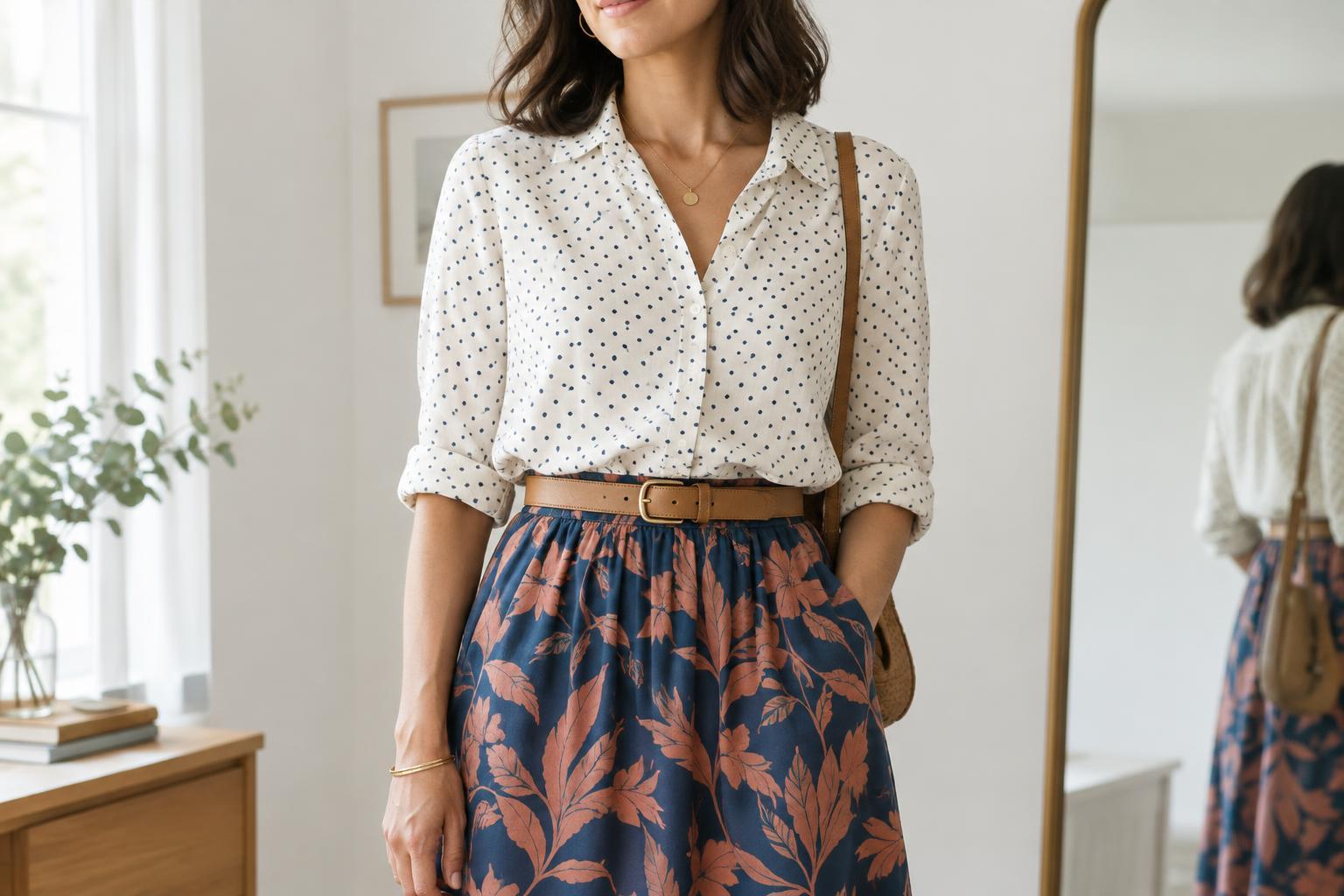
For example, try a large-check overshirt with a small-patterned neck scarf, or a skirt with bold flowers and a top with narrow stripes. You do not need to measure anything. Look at the outfit from a few steps away: if both prints seem equally strong and the result feels crowded, try swapping one for a finer or more spaced-out pattern.
Scale is not the only thing that affects how noticeable a print looks. High-contrast colours can make a tiny pattern stand out, while a large pattern in similar shades may look comparatively quiet. Treat the large-and-small pairing as an experiment, not a rule.
Find a shared colour
A colour repeated across both prints can make the pairing feel connected. It might be the background colour of one piece and a small detail in the other. A navy-and-white striped shirt, for instance, could work with a scarf whose pattern includes a little navy, even if the scarf also contains green or rust.
The shared colour need not be an exact match. Two slightly different blues may sit comfortably together, especially when they are separated by a plain garment. If the colours clash to your eye, look for a different link: perhaps both prints use soft, muted shades, or both include cream. What matters most is whether the colours make sense together to you when you see the whole outfit.
Repeating that linking colour in a solid piece can help. With a patterned blouse and printed scarf that both contain brown, plain brown trousers or a belt can make the connection more visible without adding a third pattern.
Give each print a clear role
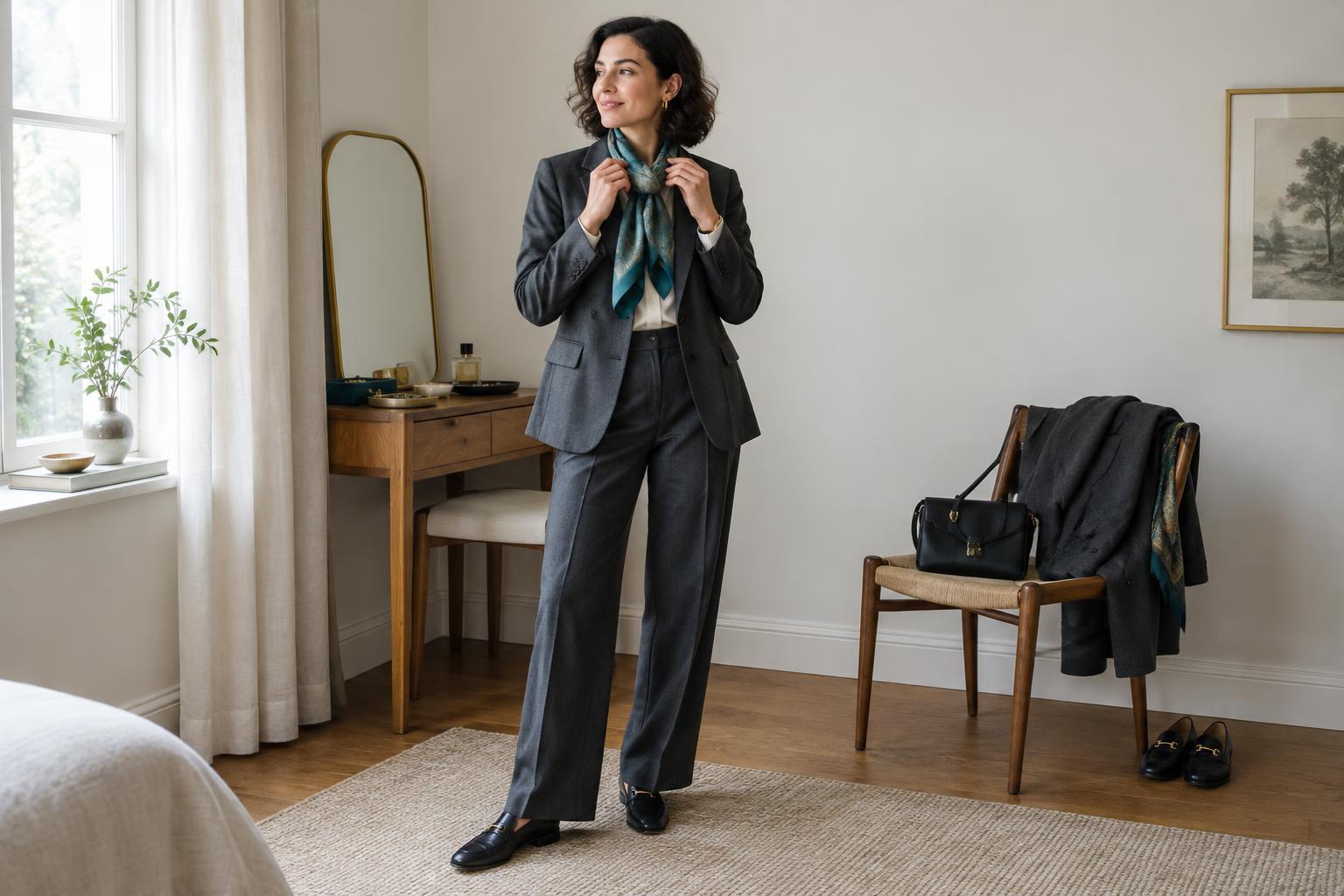
Decide which print you want people to notice first. Let it take up more space or sit closer to your face, then use the second as a smaller accent. A printed dress with a patterned scarf tied to a bag is one option; a printed scarf worn near the face with subtly checked trousers is another. Neither arrangement is automatically better—the choice depends on what you enjoy wearing.
Also notice how close the patterns are to each other. A striped shirt under a printed jacket puts them side by side, creating a more deliberate mix. Placing one print at the top of an outfit and the other at the bottom leaves a plain area between them. That little gap can make an unfamiliar combination feel easier to wear.
Accessories offer a low-commitment way to try the idea. A scarf, bag or pair of socks can provide the second print without changing the main clothing pieces. If you like the result, you can try a larger printed item another day.
Check the outfit as a whole
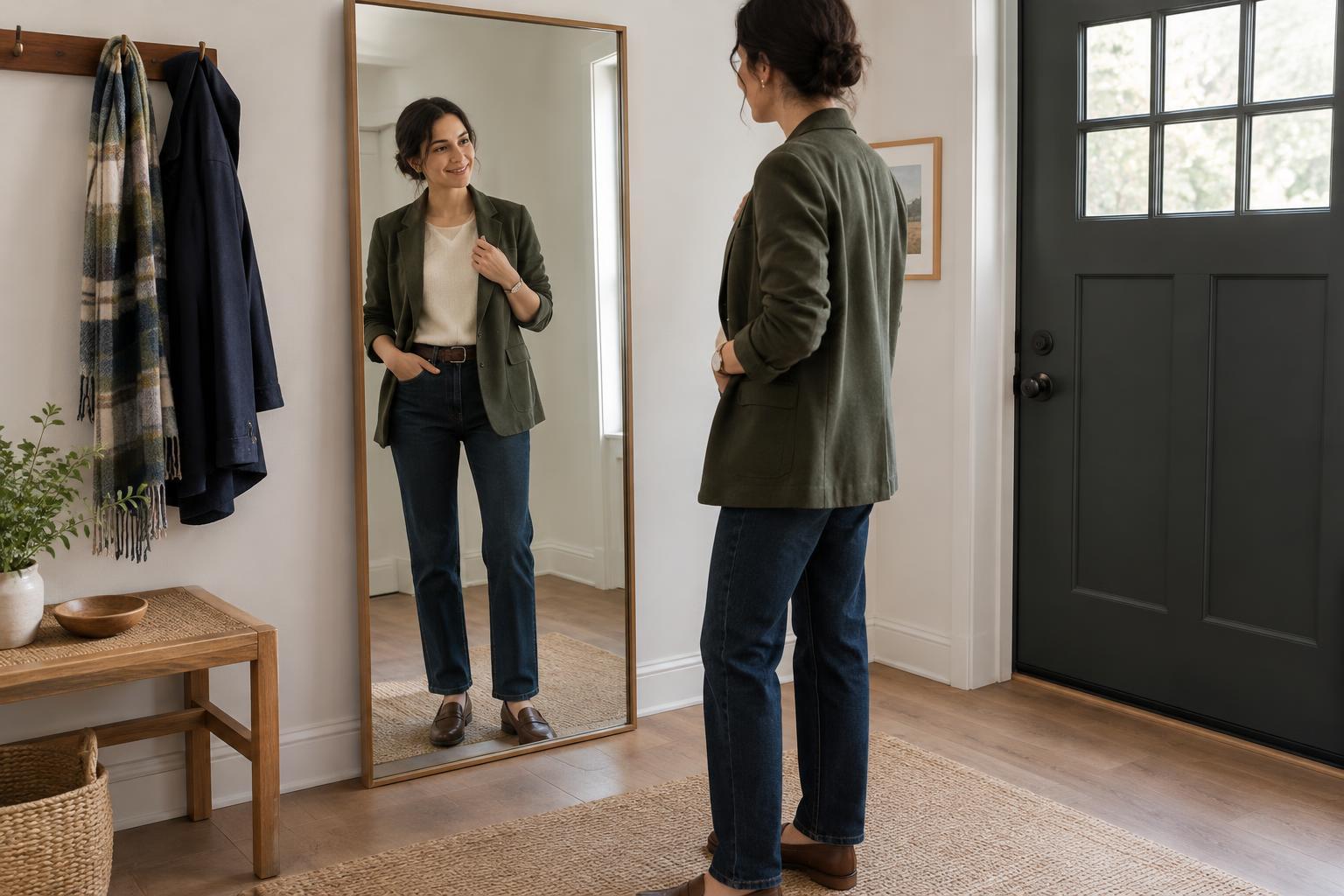
Before heading out, look at the complete outfit rather than judging two items held next to each other. Your coat, shoes and bag affect the balance too. If the mix feels overwhelming, simplify one element: choose a quieter accessory, leave a little more space between the prints or replace a high-contrast piece with a softer one.
If it feels flat, try the opposite. Bring the prints closer together or choose a second pattern with a clearer shared colour. You can also keep a combination you like in mind for later, so getting dressed does not mean starting from scratch. The best pairing is not the one that follows every guideline; it is the one you feel comfortable wearing again.