What each method does best
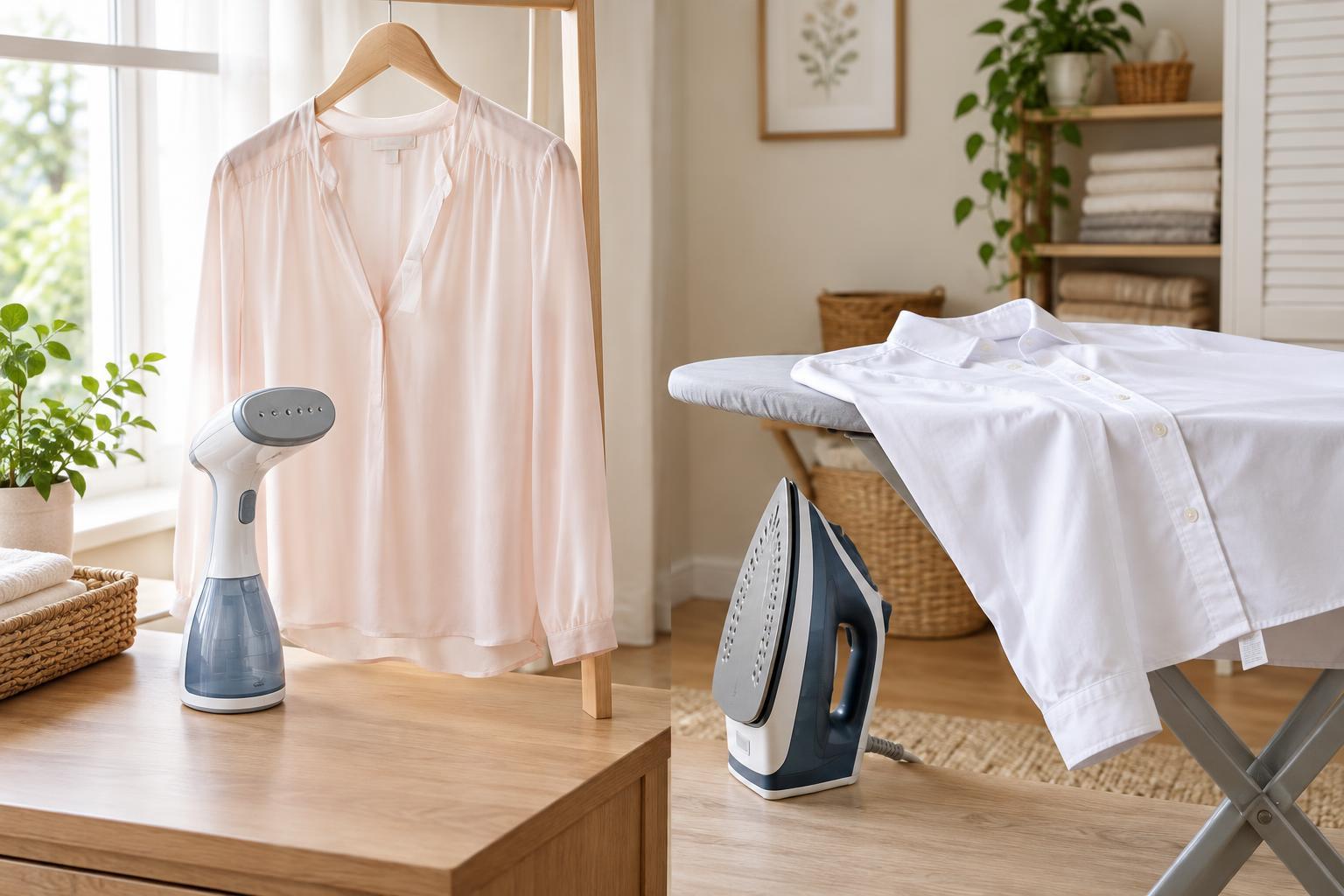
A steamer releases hot vapor into fabric while the garment hangs. It can relax light wrinkles without pressing the material flat. An iron combines heat, pressure and, if you choose, steam on a garment laid over an ironing board. That pressure makes it better for sharp creases, smooth collars and a crisp overall finish.
Neither tool is the right choice for every item. A steamer is handy when a dress, blouse or scarf looks rumpled after storage and needs a gentle refresh. An iron is usually more effective when a cotton shirt has deep folds or trousers need a defined crease. Think about the finish you want as well as the fabric: soft and relaxed, or flat and tailored.
Start with the care label
Before applying heat or moisture, read the garment’s care label and your tool’s instructions. An iron symbol may indicate whether ironing is allowed and what heat level to use. A crossed-out iron means you should not iron the item. If a label says not to steam, follow that instruction too. When the label is unclear, begin with the least aggressive approach and test a small, inconspicuous area.
Fabric names are useful clues, but they do not tell the whole story. A garment may have a lining, coating, print, trim or blend that reacts differently from its main fabric. Be especially cautious around glued details, pleats you want to preserve, and materials that may show water spots. If you are unsure how an important or delicate piece will respond, it is safer to leave the wrinkle than to apply more heat.
When steaming makes sense
Steaming is a practical choice for loose-fitting garments and pieces with gathers, draping or difficult-to-reach areas. Hang the item securely, leave room for air to circulate, and work in sections. Keep your free hand away from the steam path; hot vapor can burn skin even when the nozzle is not touching it. Let the garment dry and cool before wearing it or putting it back in the wardrobe.
The trade-off is precision. A steamer may soften a wrinkle without removing a stubborn fold, and it will not give a collar or cuff the same crisp edge as pressing. Some fabrics can become damp or develop marks, so avoid lingering over one spot. Do not assume steam will clean a garment or replace washing. It is a wrinkle-removal tool, not a substitute for following the garment’s cleaning instructions.
When ironing is worth the effort
Choose an iron when you want a smooth, controlled finish on suitable garments. Shirts, simple cotton pieces and many linen items often benefit from pressing, provided their labels allow it. Set the temperature for the most heat-sensitive part of the garment, including any trim or print. If using steam, check that moisture is appropriate for the item, and avoid letting the iron rest in one place.
For fabrics prone to shine or marks, pressing from the reverse side or using a clean pressing cloth can add a layer of protection. Pressing means lifting and repositioning the iron rather than dragging it back and forth, which can help avoid stretching or distorting a delicate shape. For a crisp crease, align the fabric carefully before applying pressure; an iron can make an accidental fold just as noticeable as an intentional one.
A simple way to choose
Ask three questions: What does the label permit? How delicate or structured is the item? What result do you want? For a lightly wrinkled, flowing blouse, permitted steaming may be enough. For a shirt that needs a neat placket and collar, an iron offers more control. A scarf may need only a brief, cautious pass of steam, while a tailored piece with a set shape may be better handled according to its specific care instructions.
Good preparation makes either method easier. Give garments enough space after laundering so wrinkles do not become tightly set, and put them away only when fully dry. Keep your steamer and iron clean according to their instructions, use suitable water if the manufacturer specifies it, and unplug the tool when finished. Choosing the gentler effective method helps your clothes look tidy without treating every wrinkle as a reason for maximum heat.