What denier does—and does not—tell you
Denier describes the weight of the yarn used to make tights. As a general guide, a lower number gives a finer, more transparent look, while a higher number tends to look more opaque and feel more substantial. It is a useful starting point when shopping, but it is not a promise about warmth, durability or exactly how much skin will show.
Tights around 5–15 denier usually look sheer. Those around 20–40 denier often provide a little more coverage while still allowing some skin tone to show. Around 50–80 denier, tights commonly look opaque, and pairs above 100 denier tend to feel thicker. These ranges can overlap: colour, knit, fibre blend and how far the fabric stretches on your legs all affect the result. If you want a specific level of coverage, look at product photos and descriptions as well as the number.
Choose coverage for the outfit and the day
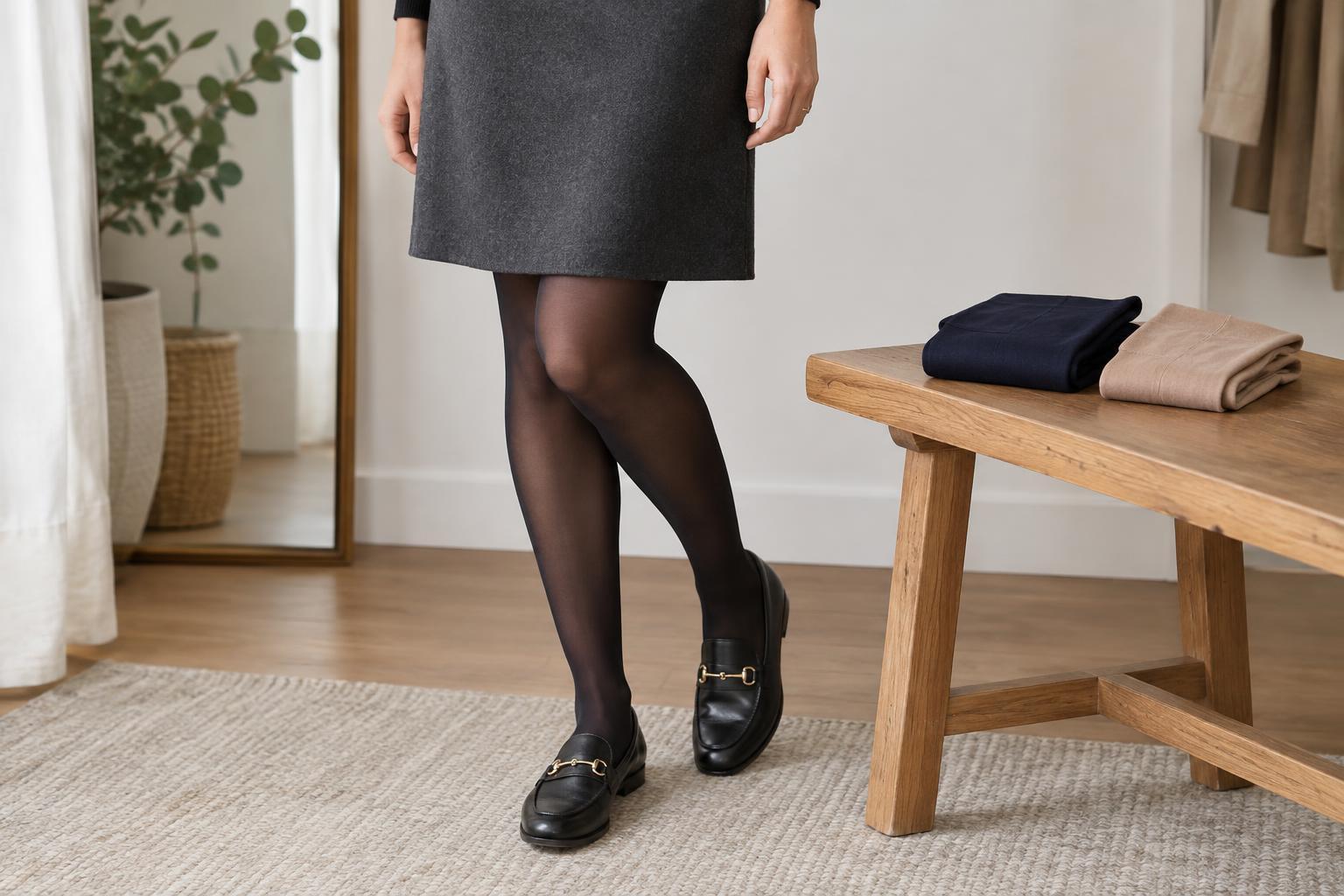
Sheer tights give bare legs a more even-looking finish without hiding them. They can work well when you want the shape of a shoe or the colour of a skirt to remain the focus. Fine fabric can snag easily, though, so sheer pairs may be less convenient for days involving lots of walking, rough seating or repeated changes of shoes.
Semi-sheer tights offer a middle ground. They soften the contrast between bare skin and clothing but retain some lightness, making them useful with dresses, skirts and tailored shorts. Opaque tights create a stronger block of colour. They can visually connect a skirt to shoes in a similar shade, or add deliberate contrast to an outfit built from simple pieces. Thicker tights may feel more comfortable in cooler conditions, although their warmth also depends on the fabric and what you wear over them.
For a small, flexible collection, consider starting with one coverage level you would wear often rather than buying every denier. A sheer or semi-sheer pair suits outfits where you want a lighter effect; an opaque pair is useful when you want coverage and a clear colour line.
Get the fit right before judging the look
The size printed on a tights package is more important than it may seem. A pair that is too small may pull down at the waist, feel tight through the toes or stretch so much that it becomes less opaque than expected. A pair that is too large may wrinkle at the ankles or knees. Check the maker’s height and weight guide when available, then consider your proportions: a longer torso or legs may make the larger of two suggested sizes more comfortable.
Pay attention to construction details, too. A wide waistband may feel steadier than a narrow one, while a gusset can add room and ease of movement. Reinforced toes may be useful with closed shoes, but can show with open-toe styles. If tights often slip, pinch or bunch on you, changing size or waistband style may help more than changing denier. When trying a pair on, ease the fabric up gradually from each foot rather than pulling hard from the waist.
Use finish and colour to shape the outfit
Finish affects how tights read at a glance. Matte tights absorb more light and tend to look understated, especially in darker colours. A subtle sheen can make legs look more prominent and add a dressier note; a high-shine finish makes a stronger statement. Neither is inherently more polished—the best choice depends on the texture of your clothes and the effect you want.
Black is versatile, but it is not the only easy option. Brown, charcoal, navy and deep burgundy can echo colours already present in a wardrobe. Matching tights closely to shoes can create an uninterrupted colour line, while choosing a different colour draws attention to the legs and footwear. If you want tights that resemble bare skin, compare the colour with your own skin tone in natural light where possible. A shade labelled “nude” may not be a close match.
Make a pair last as long as possible
Even well-made tights need gentle handling. Smooth rough nails before putting them on, and remove jewellery that might catch the fabric. Check the inside of shoes for worn areas that could rub against the toes or heels. For washing, follow the care label; a mesh laundry bag and a gentle cycle can help prevent tights from tangling with other garments. Let them dry without direct heat unless the label says otherwise.
Store clean pairs folded or loosely rolled so they are easy to find without tugging through a drawer. Keeping sheer and opaque pairs separate also makes getting dressed quicker. If a favourite pair repeatedly snags in the same place, consider whether a shoe, chair edge or storage spot is causing it. Choosing tights becomes simpler when you treat denier, fit and finish as three separate decisions: how much coverage you want, how the pair feels, and how it works with the rest of your outfit.