What makes an outfit tonal?
Tonal dressing means building an outfit around one colour family rather than repeating a single exact shade. A pale blue shirt, medium-blue jeans and a navy jacket, for example, share a colour direction while offering enough variation to distinguish each piece. The shades do not need to match perfectly; their differences are part of the look.
This approach can make outfit planning simpler because it gives you a starting point: choose a colour you enjoy wearing, then look for pieces in lighter, darker or softer versions of it. You can keep shoes and accessories in the same family or use a quiet neutral if that makes the outfit more practical. Tonal dressing is a flexible idea, not a rule that every visible item must be one colour.
Start with pieces you already wear
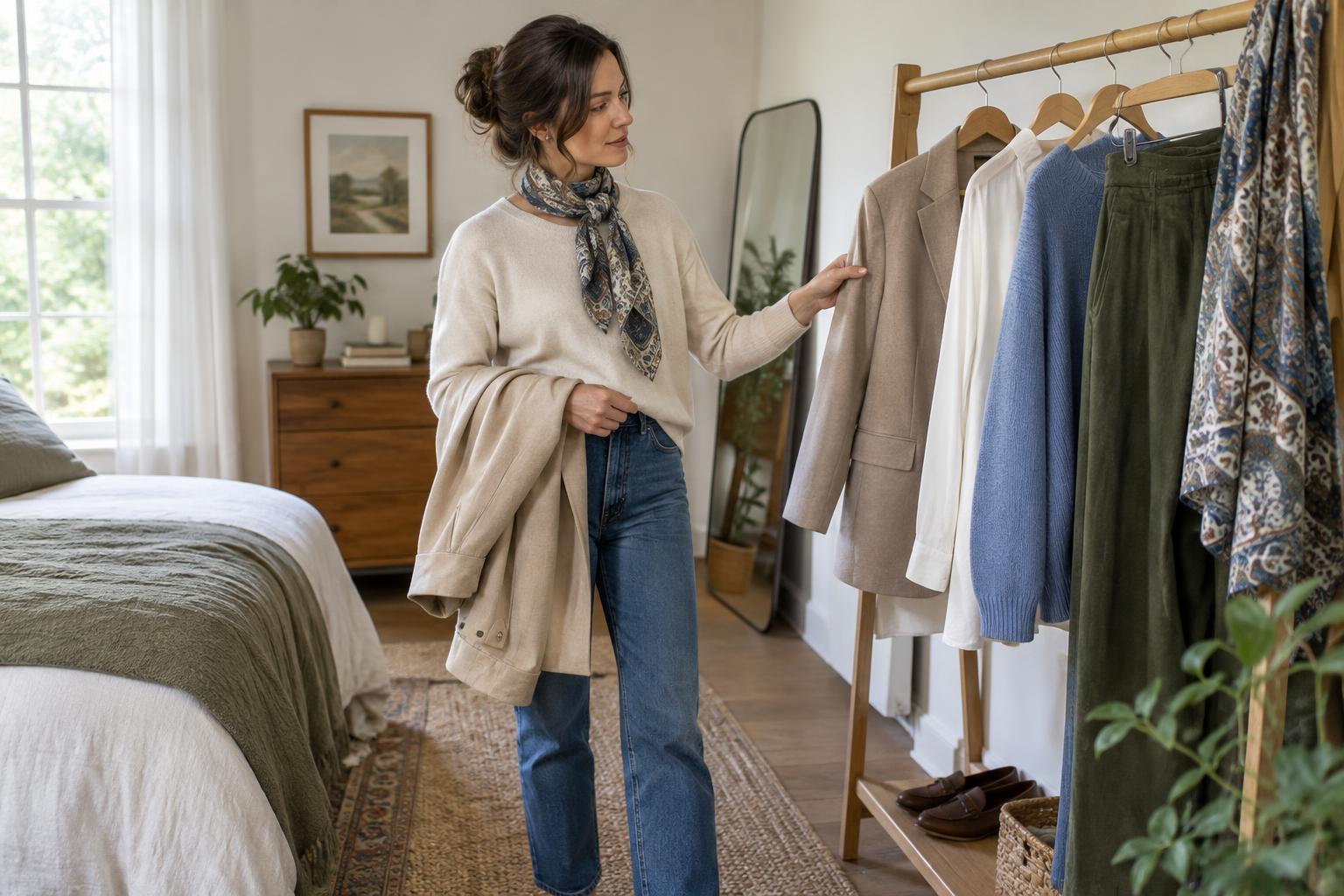
Begin with an item that fits well and suits your day, such as trousers, a skirt, a dress or a favourite knit. Treat its colour as your anchor. If you start with olive trousers, you might add a sage shirt and a deeper green layer. If your anchor is a chocolate-brown jumper, try tan trousers or a light brown coat. You do not need to buy a coordinated set to make the combination work.
Before putting pieces on, lay them together in natural light if possible. Colours that look alike in a wardrobe can appear quite different side by side. Ask whether the shades seem related and whether you like the amount of contrast between them. If one item feels out of place, try moving it farther from another shade in the outfit: a dark navy layer may sit more comfortably with pale blue than with a blue that is almost, but not quite, the same navy.
Use light and dark shades to create shape
An easy way to make a tonal outfit readable is to vary lightness. Pair a light top with darker trousers, or wear a deep-coloured outer layer over a softer shade. This gives the eye clear points of difference even when every garment belongs to the same colour family. A simple starting formula is one light piece, one mid-tone piece and one dark piece; you can adjust it to suit what you own.
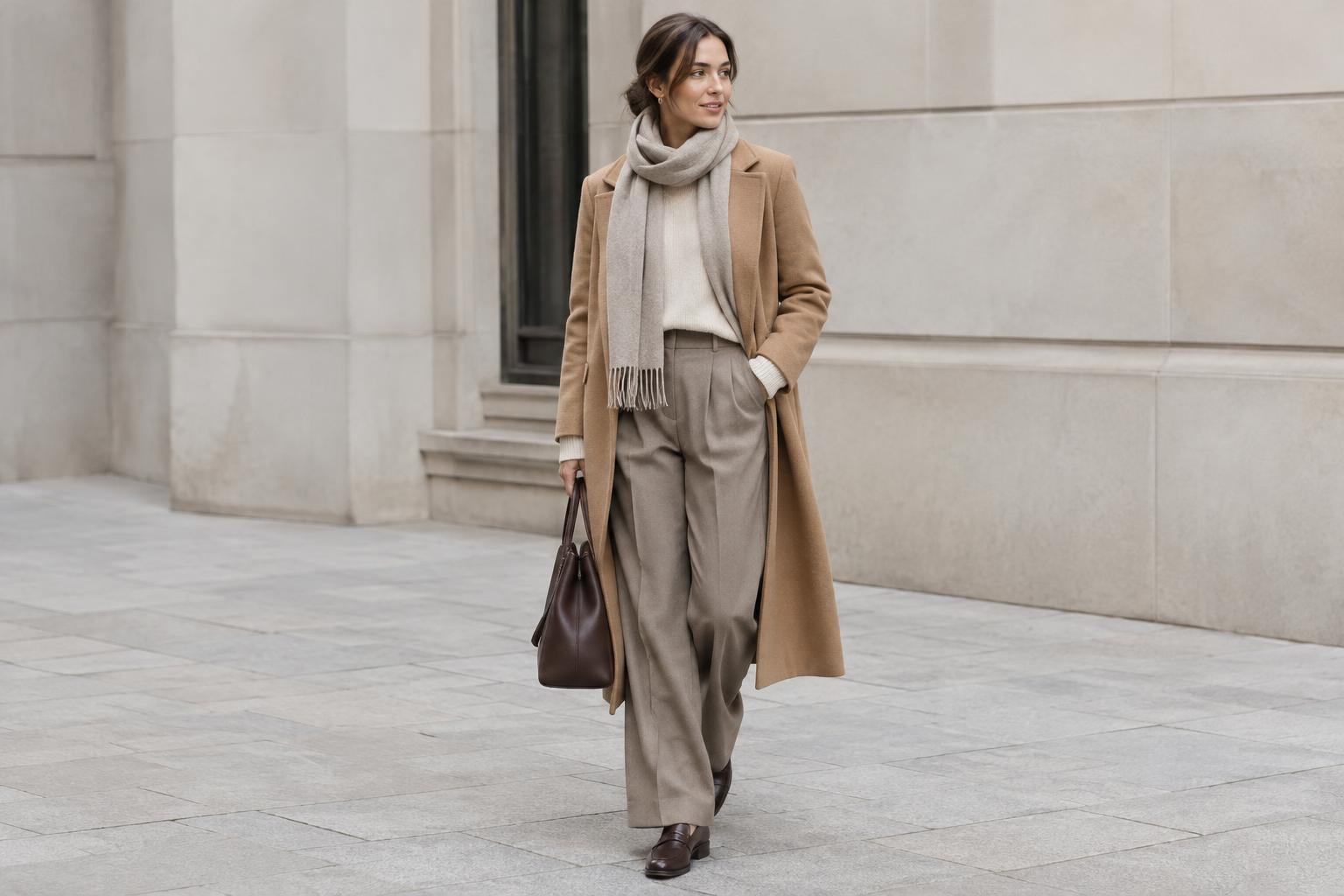
Where you place each shade is a matter of preference. A dark coat over a light outfit can frame it, while dark trousers can give a pale knit a clear base. You can also repeat a shade in a small detail, such as a scarf that echoes your trousers. If you prefer a quieter look, keep two pieces close in tone and let just one item provide contrast. There is no need to aim for a particular silhouette or visual effect unless you enjoy it.
Add interest with fabric and proportion
When colours are closely related, texture becomes more noticeable. Smooth cotton beside a chunky knit, denim beneath a soft shirt, or a matte coat over a slightly lustrous blouse can give an outfit variety without introducing another colour. Check the pieces together rather than assuming that more textures are always better. If a combination feels busy, make one garment the clear focal point and keep the others simple.
Proportion helps too. A roomy jumper with straighter trousers feels different from a fitted top under a relaxed jacket, even in the same shades. Consider the outfit as a whole: which layer is longest, where the hems fall and whether you feel comfortable moving in it. These choices often do more for an outfit than finding an exact colour match.
Finish the outfit without overthinking the match
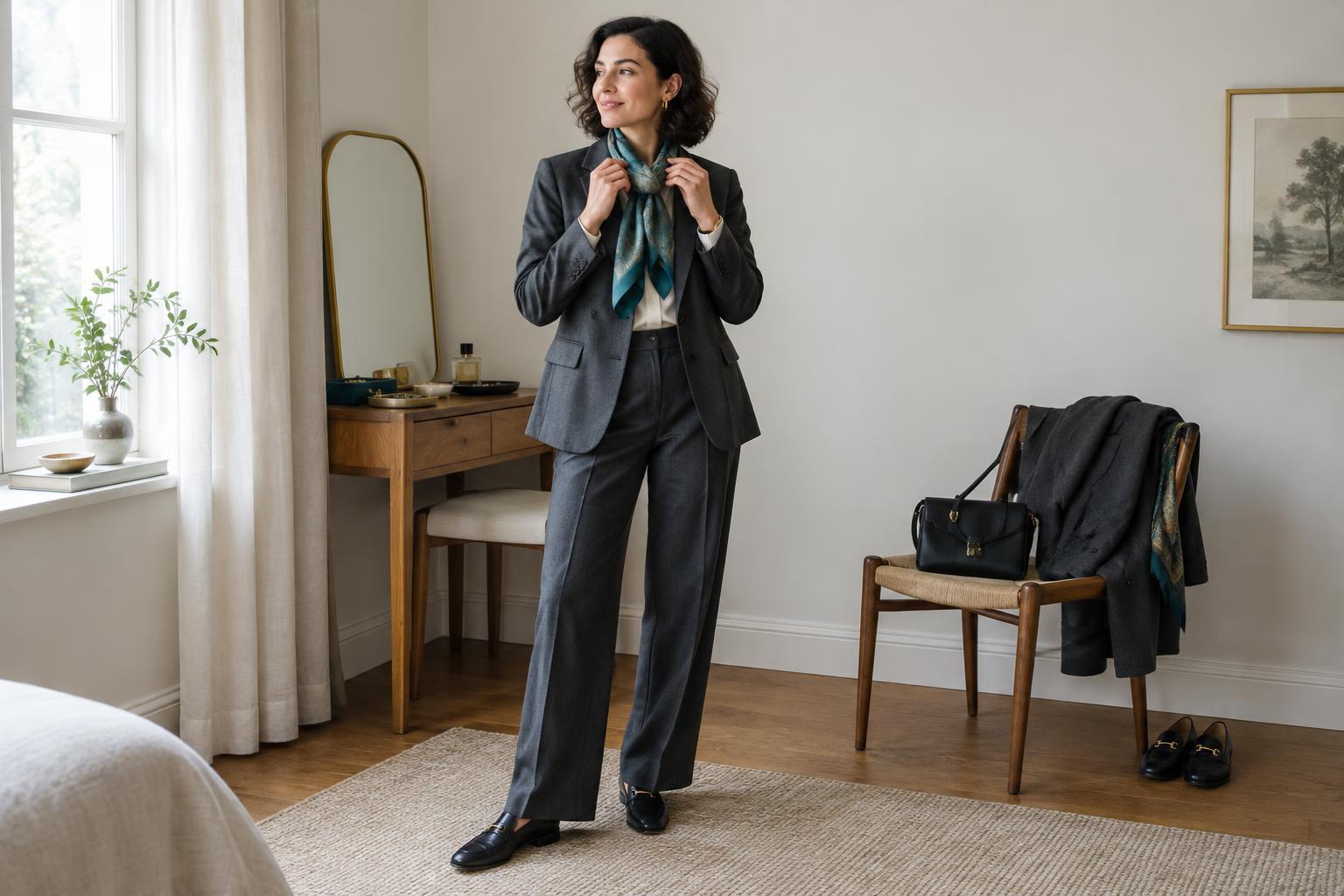
Shoes, bags and scarves can either continue the tonal scheme or give it a gentle break. For a blue outfit, navy shoes keep the colour story going, while brown or off-white shoes offer a neutral finish. A patterned scarf can work as a bridge if it includes one of the shades you are already wearing. Choose accessories for their usefulness first; a bag that fits what you carry is better than a perfect colour match that does not serve your day.
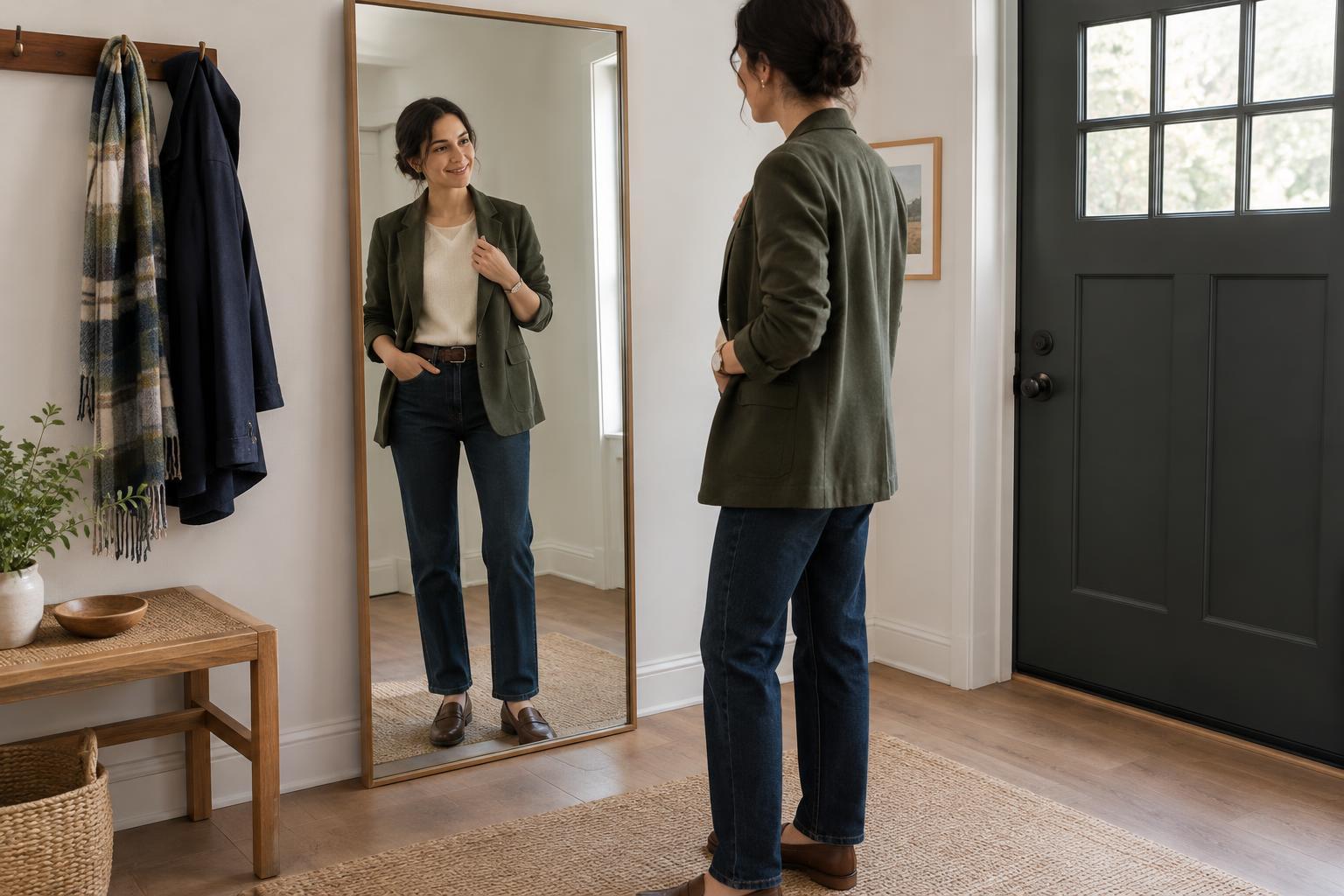
If a tonal outfit seems flat, change one thing at a time. Swap a mid-tone top for a lighter one, add a textured layer or remove an accessory that competes with the clothes. Taking a quick look in a full-length mirror can help you judge the balance better than examining each item separately. The aim is not flawless coordination. It is an outfit that feels cohesive, comfortable and recognisably yours.