What silhouette means in an outfit
Silhouette is the overall outline you see before you notice details such as buttons, prints or colour. A straight coat over straight trousers creates a different outline from a cropped jacket over wide-leg trousers, even if both outfits use similar colours. Thinking about silhouette helps you understand why familiar pieces can look different when you wear them together.
There is no single correct outline for a person or an occasion. You might prefer a close-fitting shape one day and a loose, flowing one the next. Instead of starting with rules about what you should wear, ask what you want the outfit to feel like: neat, relaxed, dramatic, soft or somewhere in between. That preference gives you a more useful starting point than trying to follow a fixed formula.
Notice where an outfit changes shape
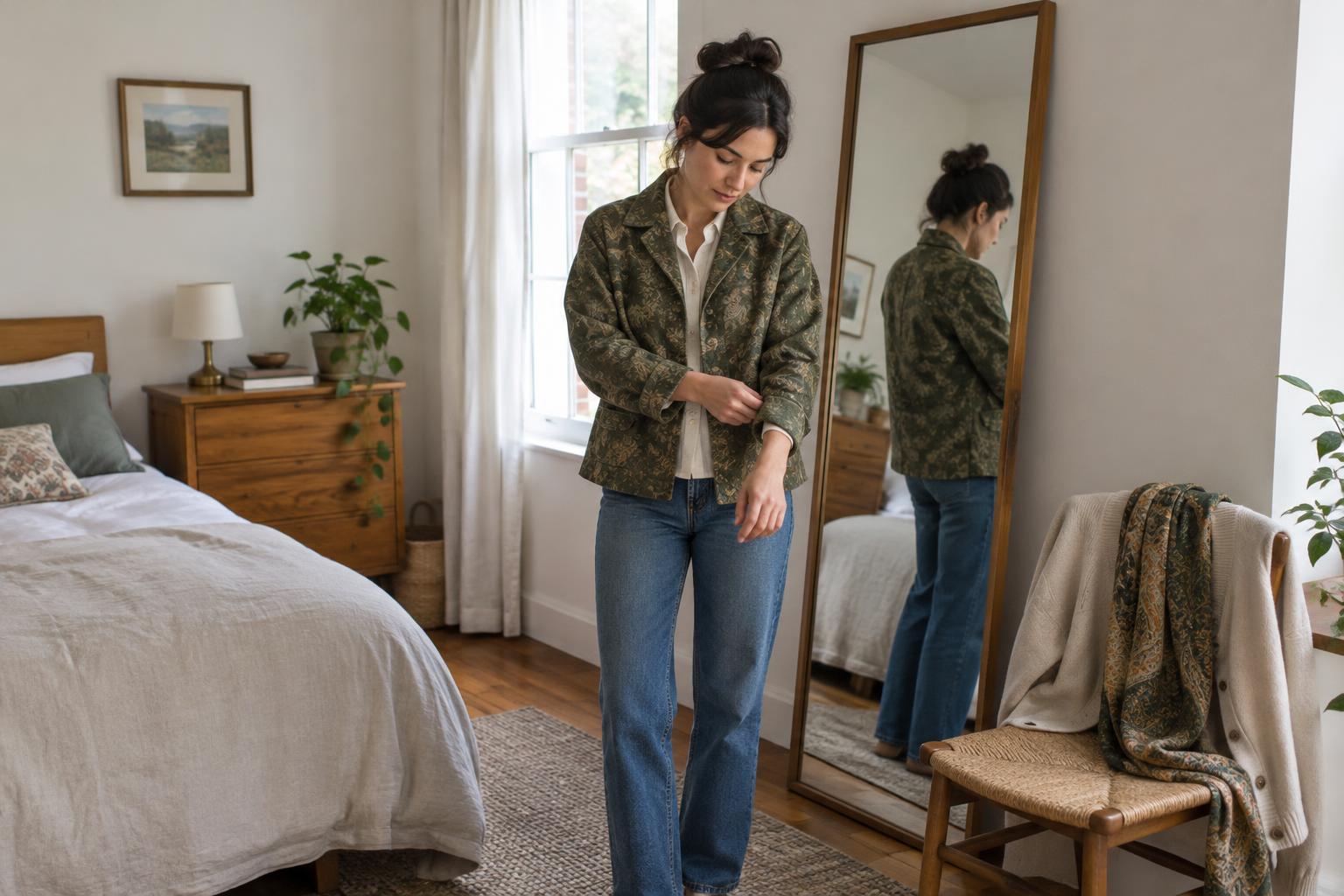
Look at the shoulder line, waist area and hem of each garment. A structured shoulder gives a jacket a defined edge, while a dropped shoulder tends to look more relaxed. A tucked shirt reveals the shape of the waistband; the same shirt worn loose may create one continuous line from shoulder to hip. Neither version is inherently better, but each changes the outfit’s outline.
Lengths matter because they determine where those changes happen. A short jacket ending near the waistband makes a clear break above the trousers or skirt. A longer jacket may create a vertical line through the middle of the outfit. Similarly, trousers that fall over a shoe have a different effect from trousers that stop at the ankle. If an outfit feels slightly off, changing one hem position or adjusting a tuck can be more effective than replacing the whole look.
Try viewing an outfit from a few steps back rather than examining each item up close. This makes it easier to see the complete shape, including how the top, bottom and shoes relate to one another.
Use volume without relying on rigid rules
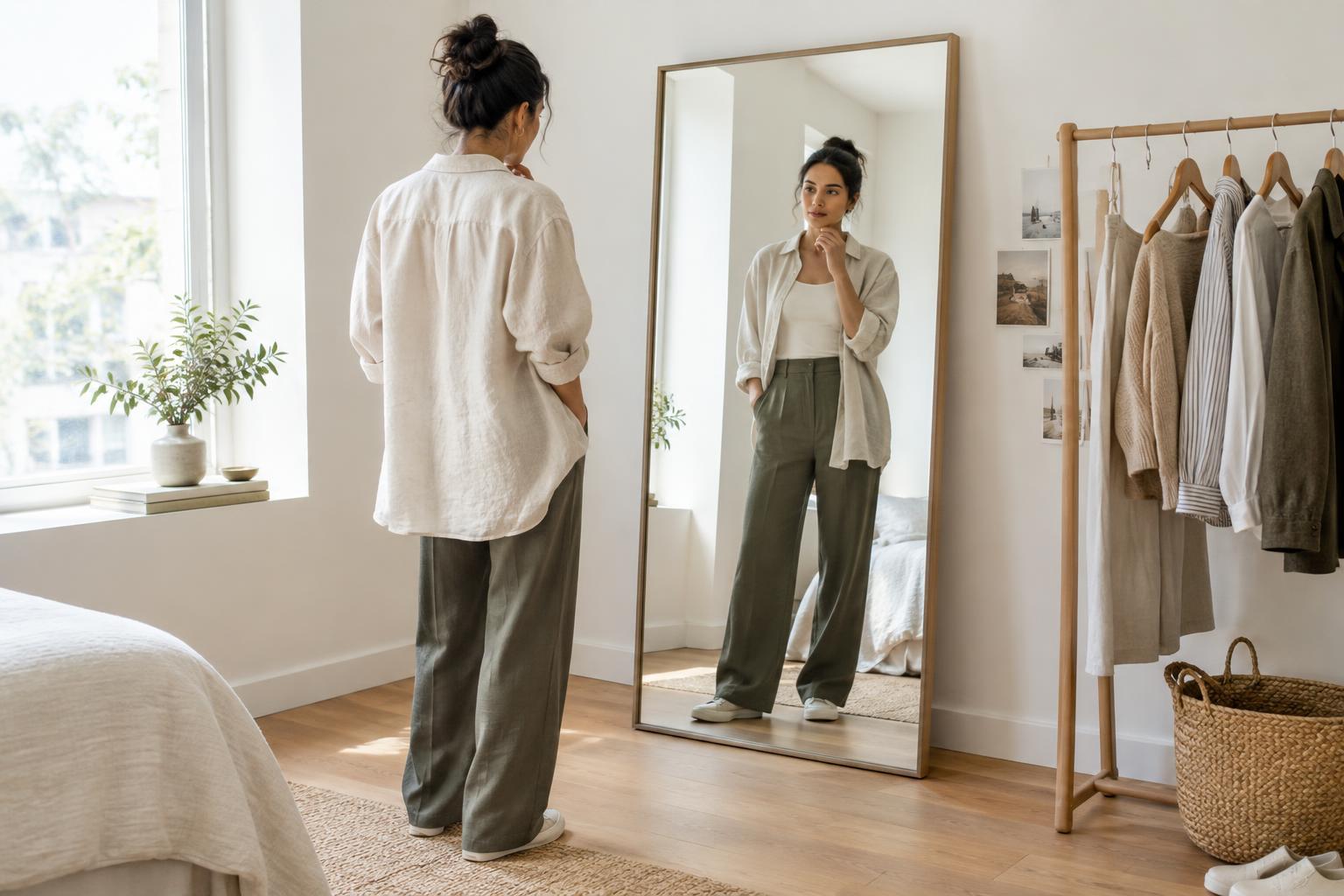
Volume describes how much space a garment creates around the body. An oversized shirt and wide trousers can make a generous, relaxed silhouette; a fitted top with the same trousers gives the lower half more visual emphasis. Pairing loose with fitted is one option, not a requirement. Head-to-toe loose clothing can also look intentional when the lengths and fabrics work well together.
If you want to explore volume, change one piece at a time. Wear a favourite pair of trousers with a close-fitting top, then with a boxy shirt, and notice what changes. You may find that rolling the shirt sleeves, leaving a few buttons open or adding a belt gives a loose outfit enough definition for your taste. These small adjustments let you experiment without needing a different wardrobe.
Comfort is part of the result. An outfit may look appealing while you stand still but feel restrictive when you sit or walk. The silhouette you choose should work in motion as well as in a mirror.
Let fabric and layers do some of the work
Two garments with the same cut can produce different silhouettes. A crisp cotton shirt may hold its shape away from the body, while a softer fabric may drape closer to it. A thick knit can add bulk beneath a fitted coat; a finer knit may sit more smoothly. When an outfit does not fall as expected, the fabric may be the reason rather than the size or cut.
Layers also change the outline. An open cardigan creates two lines down the front, while a buttoned cardigan acts more like a single top. A scarf can add softness around the neckline or bring more volume to the upper part of an outfit. Before adding a layer, consider where it ends and whether it covers or reveals the shape underneath. You can then choose whether you want a clean, continuous outline or a more textured one.
Build a silhouette vocabulary of your own
Choose a few outfits you already enjoy wearing and describe their shapes in simple terms: long and straight, short over wide, gently shaped at the waist or loose from shoulder to hem. Note which pieces create that effect. This can reveal a preference that is easier to use when getting dressed than a list of supposed style rules.
When an outfit is not working for you, make one deliberate change. Try a different shoe shape, tuck or untuck the top, swap a stiff layer for a softer one, or change where a sleeve ends. Comparing the versions helps you see what you actually prefer. Over time, understanding silhouette becomes less about correcting your appearance and more about making your clothes express the mood and ease you want.