Start with where the eye stops
A hem creates a visible line across an outfit. Depending on its colour, shape and contrast with what sits beside it, that line may draw attention to the waist, hip, knee or ankle. This is why two garments in the same colour can feel quite different when one ends a few inches lower. Hem length does not determine whether an outfit is flattering; it gives you another way to decide which parts of the outfit you want to emphasise.
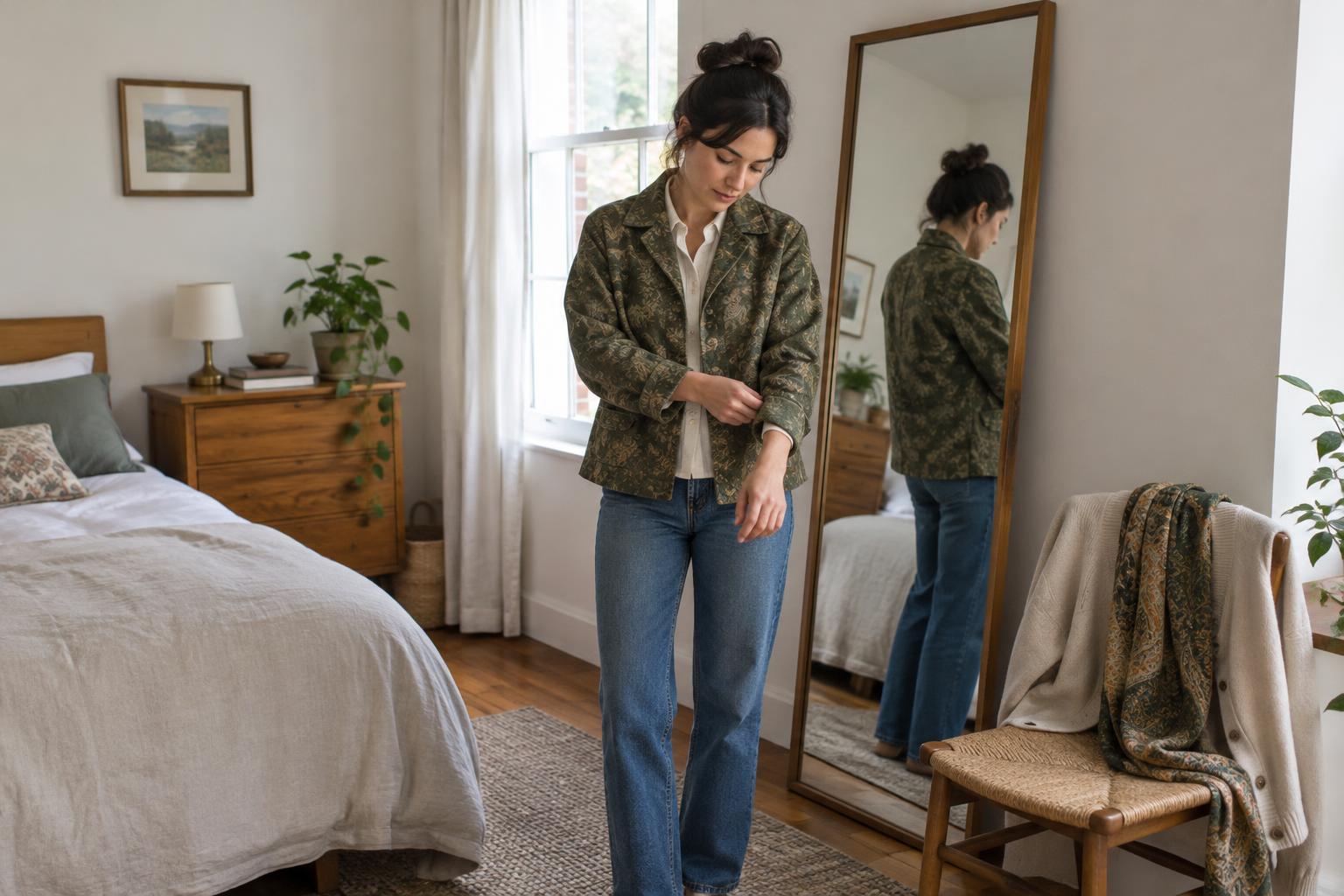
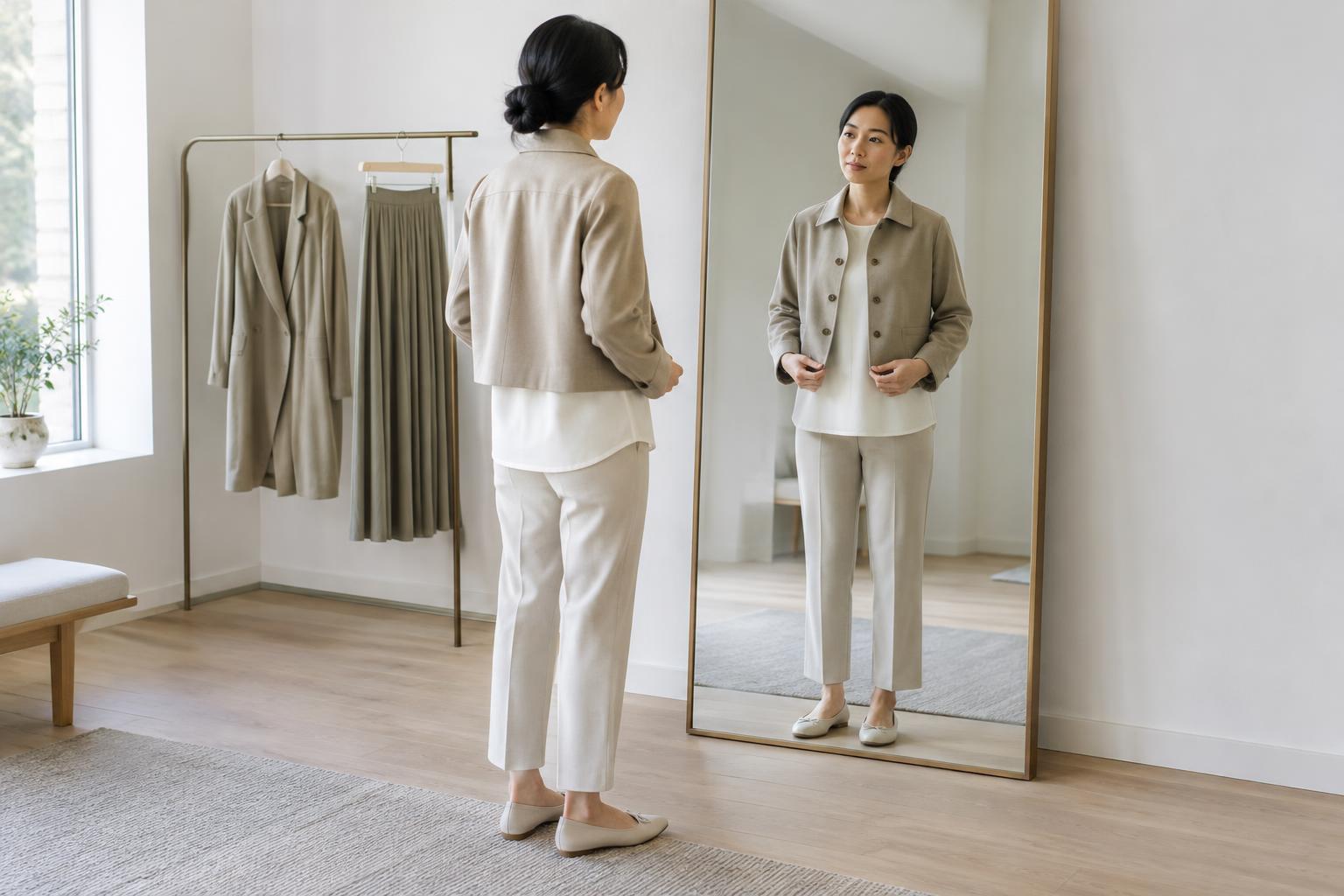
To see the effect, try on one outfit and change only a single length. Tuck a shirt, leave it loose, then fold its hem under. Or compare a cropped jacket with a longer one over the same trousers. Looking at the whole silhouette in a mirror is often more useful than judging a hem on its own. Notice where the outfit appears divided and whether that division creates the balance you want.
Use top and jacket hems to shift the balance
A top that ends near the waist leaves more of the lower garment visible, which can make the legs seem longer within the outfit. A top ending around the hip gives the upper half more visual space. Neither choice is inherently better: a short top might show the shape of wide trousers, while a longer shirt might provide the relaxed, uninterrupted line you prefer over slim ones.
Outer layers add another hem to consider. A jacket ending close to the waist can highlight the transition between top and trousers or skirt. A longer jacket may create a strong vertical shape, especially when worn open. If several hems meet at almost the same point, the outfit may look deliberately structured; if they fall at different points, each layer can remain visible. Try adjusting a sleeve or cuff as well, since those smaller edges can reinforce the overall effect.
Consider the space between a lower hem and your shoes
With skirts and dresses, the visible area between the hem and the shoe affects how the lower half reads. A hem above the knee shows more leg; a mid-calf hem places a line lower down; an ankle-length hem leaves a narrower gap. These are visual differences, not rules about which length belongs on a particular person. The fabric’s movement matters too: a flowing mid-calf skirt may feel lighter than a stiff skirt of the same length.
Trouser hems work in a similar way. Cropped trousers reveal the ankle or sock and make footwear a more noticeable part of the outfit. Full-length trousers can create a continuous line toward the shoe, though the effect changes with the width of the leg and how much fabric gathers at the bottom. When comparing lengths, wear the shoes you expect to use. A hem that feels balanced with flat shoes may sit or appear differently with a higher sole.
Let colour and shape influence the choice
Contrast makes a hem easier to see. A light top over dark trousers creates a clear boundary wherever the top ends, while similar colours can soften that break. If you want to test a new length without making it the focus, try keeping the pieces close in colour. If you want a hem to stand out, contrast can make its placement more intentional.
The shape of a garment also changes how its length looks. A straight, loose shirt may form a broad horizontal edge, while a curved or split hem can make the boundary less pronounced. A narrow skirt and a full skirt may reach the same point on the leg but give an outfit different amounts of volume. Treat length, width and colour as connected choices rather than trying to find one ideal measurement.
Test proportions before changing your wardrobe
You can experiment with hems using clothes you already own. Roll trouser cuffs to compare ankle and full lengths, use a temporary tuck to change where a top ends, or try a belt over a longer layer. Pin a skirt hem inward for a quick visual check, taking care not to damage the fabric. These small tests help you distinguish a length you genuinely like from one that simply looks unfamiliar.
Before making a permanent alteration, sit, walk and reach in the garment. A hem should work in motion as well as in a still reflection, and it needs to suit the shoes, layers and routines you have in mind. Keep notes or take private outfit photos if comparisons are helpful. Over time, you may notice a few length combinations you return to—not because they are universal rules, but because they make getting dressed easier for you.