Start with the clothes, not the control panel
Before choosing a setting, check the care labels on the items you plan to wash. A label may set a maximum washing temperature, call for a gentle cycle or rule out machine washing altogether. Treat those instructions as the starting point, then use your machine’s manual to understand its cycle names. A setting called “everyday” on one machine may work differently from a similarly named setting on another.
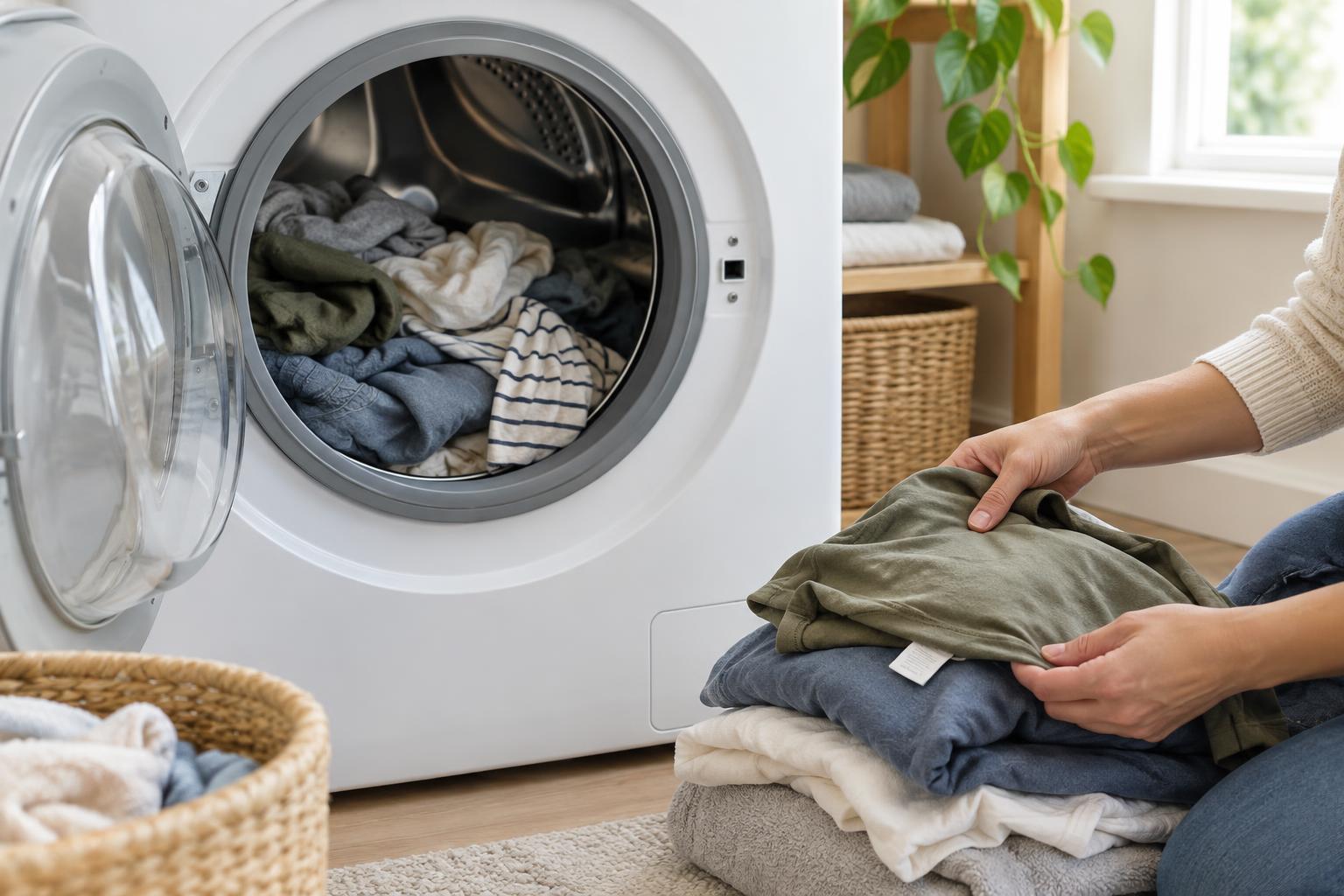
Sort with both cleaning and care in mind. Keep items that might release dye away from light clothing, particularly during their first few washes. Separate sturdy pieces, such as towels, from delicate fabrics that could be rubbed or snagged. Check pockets, close zips and turn embellished or printed garments inside out if their labels allow machine washing. These small steps make it easier to choose one suitable setting for the whole load.
What common wash cycles are for
A normal or cotton cycle is generally intended for sturdy, washable items that can tolerate more movement. It is often a practical choice for everyday cotton clothing, though the label still takes priority. A synthetics or easy-care cycle usually uses gentler movement and may be better suited to many washable blended fabrics. Neither name guarantees that every item made from those fibres belongs in that cycle.
Delicate and wool cycles are designed to reduce agitation for items that need gentler handling. Use them only when the garment label permits machine washing, and consider a mesh laundry bag for small or snag-prone pieces. A quick wash is usually best reserved for a modest load of lightly worn clothes; a short cycle may not give heavily soiled items enough time to wash well. Heavy-duty settings can be useful for robust, dirty items, but they may be too rough for ordinary clothes. If you are unsure, choose the gentlest suitable cycle rather than the most intensive one.
Choose temperature and spin speed with care
Water temperature is another part of the decision. Cold or cool water is a useful default for many everyday loads, especially when you want to be cautious with colour and fabric wear. Warmer water may help with some soils, provided every item’s label permits it. Do not assume that hotter is always cleaner or better: heat can be unsuitable for some dyes, finishes, trims and fibres. If a garment has a specific temperature limit, stay within it.
Spin speed affects how much water remains in clothes at the end of the wash. A faster spin can shorten drying time for sturdy items, while a lower spin is often kinder to delicate pieces and may reduce creasing. If your machine lets you adjust spin separately, match it to the most vulnerable item in the load. Clothes that come out wetter after a gentle spin may simply need more time to dry.
How full should the drum be?
A load needs enough room for water and clothes to move. Do not pack items tightly into the drum or press down to make more fit. For an ordinary load, loosely filled clothes with some space above them are a better guide than a drum stuffed to the top. Delicate and quick cycles often work best with smaller loads; consult your machine’s manual for its limits, because the permitted load can vary by cycle.
Machine capacity is typically stated as a weight of dry laundry, but you do not need to weigh every basket to wash sensibly. Notice how freely the clothes sit in the drum, and wash bulky items separately when they take up most of the available space. A single large item may also wash or spin unevenly in some machines. If the washer struggles to spin or clothes emerge with patches that seem poorly rinsed, check whether the load was too large or badly balanced before changing the cycle.
Build a simple routine and adjust as needed
For a typical mixed wardrobe, start by making a few compatible piles: sturdy everyday clothes, gentler washable items, and towels or other robust household laundry. Choose the cycle according to the most care-sensitive item in each pile, check the label limits for temperature, and leave room in the drum. Measure detergent according to its packaging and your machine’s guidance; adding extra is not a reliable way to improve a crowded wash.
Once the cycle finishes, take clothes out reasonably promptly and dry them as their labels direct. If a load is still visibly dirty, consider whether it was too full, too short a cycle or poorly sorted. If delicate items look stretched or worn, try a gentler setting, a lower spin or a smaller load next time. The aim is not to find one perfect setting for everything, but to make a few repeatable choices that keep your wardrobe clean without unnecessary wear.