Start with the shape you want
A belt does more than hold fabric in place. It draws a line across an outfit, which can make a loose dress feel more defined or give an open long layer a clearer shape. Before reaching for one, look at the garment without it. Do you want to keep its relaxed drape, create a gentle waist, or bring a roomy layer closer to the body? The answer helps you decide whether a belt will improve the outfit at all.
Try the belt over the complete outfit, including the shoes and any outer layer you expect to wear. A placement that looks balanced over a dress alone may feel different under a jacket. Stand naturally rather than pulling the fabric tight for the mirror. The most useful position is one that looks good when you move, sit and let your arms rest at your sides.
Find a comfortable placement
Your natural waist is a sensible starting point, but it is not a rule. Place the belt where your torso bends, then move it slightly up or down and compare the effect. A higher placement can leave more of a long dress or shirt visible below the belt; a lower placement can make the upper part look more relaxed. Small shifts often matter more than a dramatic change in position.
Let the garment’s construction guide you. A dress with a defined waist seam often looks tidy when the belt sits near that seam. On a straight or oversized dress, try gathering a little fullness toward the sides or back before fastening, rather than trapping a large fold at the front. If a belt rides upward whenever you move, it may be too tight, sitting on a slippery fabric, or placed where the garment naturally narrows. Adjust one thing at a time instead of continually tightening it.
Match belt width to fabric and volume
A narrow belt introduces a subtle line and usually asks less of a lightweight dress or fine-knit cardigan. A wider belt makes a stronger visual break and can help organise the volume of a substantial shirt dress or long, structured layer. Neither choice is universally better: the question is whether the belt looks in scale with the garment and feels comfortable over its seams.
Fabric also affects the result. Soft material may gather into small folds, while crisp material may stand away from the body below a belt. Check the back and sides as well as the front. If the fabric bunches awkwardly, loosen the belt, redistribute the fullness or choose a slimmer one. Very delicate knits and easily marked fabrics may be better left unbelted, especially if the buckle or belt edge catches on them.
Belt long layers without losing their ease
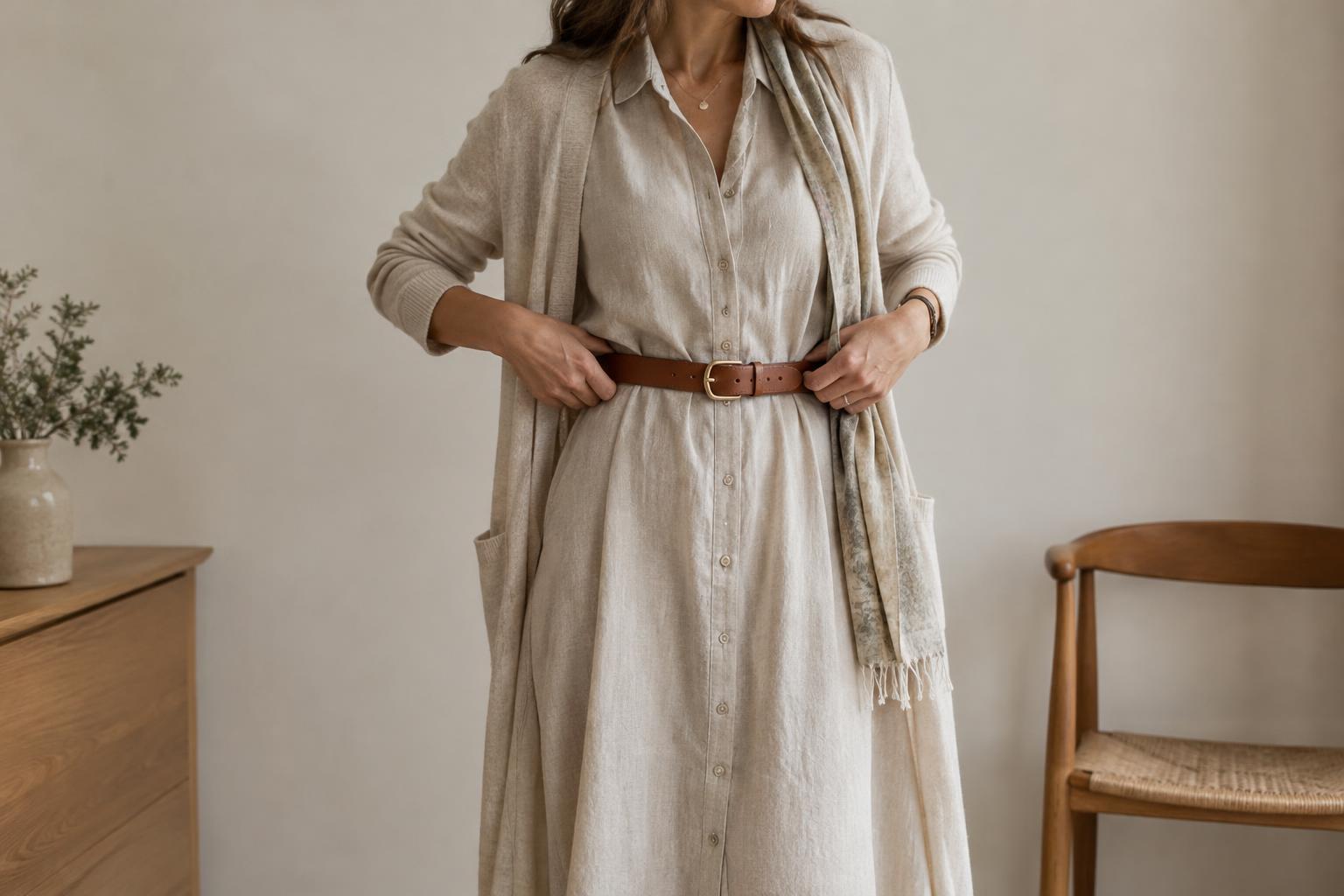
Over a long cardigan, lightweight coat or open shirt, a belt can create shape while still showing the layer underneath. For an open layer, you can belt only the outer garment and leave a little space at the front, or belt everything together for a more contained look. Try both: the first keeps a vertical opening visible, while the second creates a clearer outline.
Pay attention to what happens below the belt. If the lower edges flare in a way you dislike, move the belt, fasten a button, or let the layer hang open instead. A long layer does not need to be pulled tightly around the body to look intentional. Leave enough room for the fabric to fall and for you to sit comfortably. If the layer has its own tie belt, that is a useful starting point, but a separate belt can change the look if its weight suits the fabric.
Use colour and finishing details deliberately
A belt close in colour to the garment gives gentle definition without dividing the outfit sharply. A contrasting belt makes the waistline a more noticeable feature. You can echo its colour elsewhere, such as in your shoes or bag, but an exact match is not necessary. A simple buckle tends to blend in; a larger one becomes part of the outfit’s focus, so check how it sits against buttons, pockets or a print.
Finish by checking the belt tail and the fabric underneath it. Tuck the tail through a keeper if there is one, or let it hang neatly if the style allows. Smooth any folds, then take a few steps and sit down. If you keep adjusting the belt or the dress, try a different position or skip the belt. Proportion is useful, but comfort is what makes the outfit workable throughout the day.